Canadian Institutes of Health Research 2025-26 Departmental Results Report
On this page
Copyright information
© His Majesty the King in Right of Canada, as represented by the Minister of Health, 2026
ISSN: 2560-9637
Aussi disponible en français sous le titre : Rapport sur les résultats ministériels 2025-2026 des Instituts de recherche en santé du Canada
At a glance
This departmental results report details Canadian Institutes of Health Research’s (CIHR) actual accomplishments against the plans, priorities and expected results outlined in its 2025-26 Departmental Plan.
These results align with the priorities outlined in the May 21, 2025, mandate letter from the Prime Minister, as well as with CIHR’s raison d’être and operating context.
Key priorities
CIHR identified the following key priorities for 2025-26:
- Support research excellence and strengthen Canada’s health research capacity in emerging and critical gap areas by fostering collaborations and making strategic investments in key initiatives and funding opportunities.
- Expand, diversify, and nurture Canada’s talent pool by developing the current and next generation of health research leaders across all training and career stages and beyond.
- Support health research initiatives developed by and with Indigenous (First Nations, Inuit, Métis) Peoples.
- Advance mental health and substance use initiatives with the goal of enhancing both service delivery and health outcomes.
- Mobilize knowledge, for Canadians and internationally, to help move discovery into impact.
- Reinforce Canada’s clinical trials ecosystem by supporting and investing in clinical trials infrastructure, training and research.
- Foster innovation and commercialization by supporting pathways that mobilize health research discoveries into tangible health, social and economic outcomes.
- Strengthen Canada’s health and life sciences data ecosystem through strategic partnerships, improved coordination, and enhanced access to high-quality data to support research and evidence-informed decision making.
- Positioning health and life sciences into the Government of Canada’s broader Artificial Intelligence strategy to accelerate future benefits this can bring to drive research advancements.
Highlights
In 2025-26, CIHR and its 13 Institutes continued to strengthen Canada’s health and life sciences research enterprise through investments that advanced research excellence, research capacity, and the use of evidence. Working with partners across Canada and internationally, CIHR supported research and innovation that addressed health and health system priorities while contributing to broader government objectives related to economic growth, resilience, productivity, and sovereignty.
In addition to the important role of supporting basic research, CIHR advanced a strong culture of collaboration for impact, bringing together researchers, communities, knowledge users, and decision makers to help ensure that research investments generated benefits beyond knowledge creation. Through support for talent development, knowledge mobilization, innovation, and the responsible use of data and emerging technologies, CIHR helped strengthen Canada’s ability to generate, share, and apply research evidence. Together, these efforts increased the value and impact of publicly funded research, helping bolster the health and well-being of Canadians while supporting stronger health systems, economic prosperity, and a more resilient Canada.
- Total actual spending (including internal services): $1,373,263,328
- Total full-time equivalent staff (including internal services): 492
For detailed information on CIHR’s total spending and human resources, read the Spending and human resources section of this report.
Summary of results
The following provides a summary of the results the Agency achieved in 2025-26 under its “core responsibility” (its main area of activity).
-
Core responsibility: Funding Health Research and Training
Actual spending: $1,329,929,889
Actual human resources: 257In 2025-26, CIHR remained focused on delivering its core responsibility of funding health research and training. Through activities aligned with its three departmental results, CIHR supported internationally competitive research, strengthened Canada’s health research capacity, and increased the use and impact of research.
Working with its tri-agency partners, the Natural Sciences and Engineering Research Council (NSERC) and the Social Sciences and Humanities Research Council (SSHRC) and other national collaborators, CIHR galvanized additional expertise and opportunities that strengthened Canada’s health research community’s ability to address shared health challenges. CIHR’s active engagements with its tri-agency partners and other key stakeholders amplified the impact of its investments and ensured that Canada’s health research remained internationally competitive. Through international collaborations and strategic partnerships, CIHR continued to strengthen its global impact by advancing shared research priorities, fostering knowledge mobilization, and contributing to collective efforts to address complex health challenges.
CIHR continued to support Indigenous-led research grounded in Indigenous ways of knowing and doing through funding initiatives addressing the unique needs of Indigenous Peoples in Canada as part of the Agency’s broader efforts to drive research excellence for health system impact.
In 2025-26, CIHR strengthened Canada’s health research capacity most notably through the implementation of the Canada Research Training Awards Suite, a tri-agency collaboration aimed at developing the current and next generation of world-class health research leaders across all training and career stages. In addition, the Eddie Goldenberg Research Chairs of Canada program was launched to attract outstanding international researchers in strategic areas for Canada.
CIHR continued to advance research excellence through a rigorous, internationally recognized peer review system that ensures funding decisions are based on scientific merit, quality, and potential impact. CIHR also engaged in targeted consultations with the research community on the topic of increasing peer review quality.
Transforming research outcomes into real-world applications and improved health outcomes for all Canadians is pivotal for CIHR. To support this commitment, CIHR convened and participated in foundational forums to align and drive shared priorities such as innovation and commercialization to improve pathways from research discovery to application, and securing the inclusion of health and life sciences in the Government of Canada’s broader Artificial Intelligence strategy. These efforts advanced work to foster innovation, address barriers to commercialization, support coordinated approaches to health and life sciences data and artificial intelligence and promote open science.
For more information on CIHR’s activities related to Funding Health Research and Training, read the “Results: What we achieved” section of this report.
From the Minister

The Honourable
Marjorie Michel P.C., M.P.
Minister of Health
I am pleased to present the 2025-26 Departmental Results Report of the Canadian Institutes of Health Research (CIHR).
The health and well-being of Canadians depend on having a strong, agile, and diverse health research ecosystem. CIHR's investments are central to strengthening that ecosystem by advancing research excellence, building health research capacity, and mobilizing discoveries into better health, stronger communities, and greater prosperity for Canadians.
In 2025-26, CIHR continued to deliver on its mission to support research excellence and strengthen Canada’s health and life sciences research capacity. Beyond investing in research, CIHR worked with partners across governments, academia, health care, and industry to align Canada's health research ecosystem with the Government's prosperity agenda, strengthening collaboration and setting shared priorities for the future. The Agency also advanced key priorities that help transform Canada’s economy, strengthen sovereignty, and diversify global partnerships.
CIHR played a leadership role in advancing Canada's health and life sciences data ecosystem, positioning the sector to seize opportunities presented by the biological revolution driven by artificial intelligence, advanced biotechnology, and unprecedented volumes of data. Efforts with Innovation, Science and Economic Development Canada (ISED), Health Canada, and other partners resulted in health and life sciences being included in the Government’s broader Artificial Intelligence strategy. This included investments for VITAL, a federated hospital-based health data program, setting the stage for further investment and growth across other platforms. Together with the Canadian Institute for Health Information (CIHI), CIHR convened eight federal partners through the establishment of a federal Collaboratorium to strengthen alignment and advance shared priorities in health and life sciences data.
CIHR commercialization initiatives provide a structured pathway for researchers to translate health discoveries into usable products and services, fostering collaboration with industry and supporting economic and societal impact. The Agency advanced commercialization as a strategic priority by engaging stakeholders across Canada to help shape a collective vision for Canada's health innovation pipeline in collaboration with federal partners. This collaborative effort will strengthen the commercialization ecosystem and accelerate the mobilization of health research discoveries into economic and societal benefits.
The Agency leveraged its catalytic role by bringing researchers, policy makers, and health system leaders together to address pressing health challenges. This included organizing events to broker knowledge on issues such as the fentanyl crisis, opioid use, pain care, and health system transformation. CIHR launched its renewed Knowledge Mobilization Strategy and Action Plan and funded more than 70 Partnering for Impact: Catalyst Grants to strengthen collaboration, co-produce research with partners, and accelerate the use of evidence in policy and practice.
Research is critical to prevent and respond effectively to emerging health threats. CIHR and partners renewed their investments in seven pan-Canadian research platforms that will strengthen Canada’s preparedness infrastructure and capacity to detect, monitor, and respond to emerging infectious diseases. The Agency also mobilized funds to support research on avian influenza and to study the effects of wildfire evacuations on Indigenous (First Nations, Inuit and Métis) communities.
One of CIHR’s priorities is to co-produce research with people and communities with lived experience, policy and decision makers, clinicians, and other partners to help move evidence into practice and improve health outcomes for Canadians. Last year, CIHR made targeted investments, through the Strategy for Patient-Oriented Research, to sustain key research and data networks that support patient and community-driven research in regions throughout Canada. The Agency made new investments in the Canadian Consortium on Neurodegeneration in Aging to help improve the lives of Canadians living with dementia and their families. It also expanded the Integrated Youth Services Network of Networks initiative to further improve access to evidence-informed mental health services for youth across the country.
Training the next generation of researchers remains essential to maintaining a strong and diverse research ecosystem in Canada. In collaboration with its tri-agency partners, NSERC and SSHRC, CIHR launched the Canada Research Training Awards Suite and increased the number and value of awards available for graduate students and postdoctoral researchers. This modernizes, harmonizes and enhances the approach to supporting research training. In addition, CIHR worked with experts in the design of the Eddie Goldenberg Research Chairs of Canada program which was launched to attract outstanding international researchers in strategic areas for Canada. CIHR continued to build Indigenous research capacity, through ongoing support to the Network Environment for Indigenous Health Research (NEIHR) program, which was expanded to include Yukon and now covers all regions in Canada.
I encourage you to read the 2025-26 CIHR Departmental Results Report to learn more about how CIHR’s investments, leadership in the health research landscape and partnerships are improving the health, well-being and prosperity of Canadians.
Results: What we achieved
Core responsibility and internal services
Core responsibility: Funding Health Research and Training
In this section
Description
The Canadian Institutes of Health Research (CIHR) is Canada’s health research investment agency. By funding research excellence, the Agency supports the creation of new knowledge and its mobilization into improved health for Canadians, more effective health services and products and a strengthened Canadian health care system. This is achieved by providing grants that fund health research and/or provide career and training support to the current and next generation of researchers.
Quality of life impacts
CIHR’s core responsibility contributes to the Health domain of the Quality of Life Framework through its activities, more specifically to the “Health-adjusted Life Expectancy” and “Perceived Mental Health” indicators. It also contributes to the “Prosperity” domain’s “Investment in In-house Research and Development” and “Postsecondary Attainment” indicators. And finally, CIHR contributes to the “Society” domain’s “Shared Values” indicator.
Progress on results
This section details the Agency’s performance against its targets for each departmental result under Core responsibility: Funding Health Research and Training.
Table 1: Canada’s health research is internationally competitive
Table 1 shows the target, the date to achieve the target and the actual result for each indicator under “Canada’s health research is internationally competitive” in the last three fiscal years.
| Departmental Result Indicators | Target | Date to achieve target | Actual Results |
|---|---|---|---|
| Canada's rank among the Organization for Economic Co-operation and Development (OECD) nations on the citation score of related health research publicationsFootnote 1 | Ranking higher than or equal to 17 | March 31, 2026 | 2023-24: 17 2024-25: 19 2025-26: 18 |
| Percentage of funded research involving international collaborations | Greater than or equal to 13.5% | March 31, 2026 | 2023-24: 14.2% 2024-25: 14.7% 2025-26: 15.6% |
| Number of research projects funded jointly by CIHR and (an) international partner(s) | Greater than or equal to 151 | March 31, 2026 | 2023-24: 67 2024-25: 46 2025-26: 50Footnote 2 |
Table 2: Canada’s health research capacity is strengthened
Table 2 shows the target, the date to achieve the target and actual result for each indicator under “Canada’s health research capacity is strengthened” in the last three fiscal years.
| Departmental Result Indicators | Target | Date to achieve target | Actual Results |
|---|---|---|---|
| Percentage of newly funded recipients who self-identify as women | Greater than or equal to 33.3% | March 31, 2026 | 2023-24: 50.0% 2024-25: 51.1% 2025-26: 52.5% |
| Percentage of newly funded recipients who self-identify as visible minoritiesFootnote 1 | Greater than or equal to 13.5% | March 31, 2026 | 2023-24: 29.9% 2024-25: 28.9% 2025-26: 32.2% |
| Percentage of newly funded recipients who self-identify as Indigenous Peoples | Greater than or equal to 1.1% | March 31, 2026 | 2023-24: 1.8% 2024-25: 2.5% 2025-26: 2.5% |
| Percentage of newly funded recipients who self-identify as persons with disabilities | Greater than or equal to 1.6% | March 31, 2026 | 2023-24: 6.7% 2024-25: 7.2% 2025-26: 9.8% |
| Percentage of research that addresses sex or gender considerations | Greater than or equal to 67% | March 31, 2026 | 2023-24: 84.3% 2024-25: 85.8% 2025-26: 86.2% |
| Percentage of total research investments in grants and awards addressing Indigenous health | Greater than or equal to 4.6% of CIHR’s total annual Grants and Awards expenditures | March 31, 2026 | 2023-24: 5.2% 2024-25: 4.7% 2025-26: 5.5%Footnote 2 |
| Percentage of funded research trainees reporting using their research knowledge in their current position | Greater than or equal to 90% | March 31, 2026 | 2023-24: 92.8% 2024-25: 92.8% 2025-26: 84.0%Footnote 3 |
Table 3: Canada’s health research is used
Table 3 shows the target, the date to achieve the target and actual result for each indicator under “Canada’s health research is used” in the last three fiscal years.
| Departmental Result Indicators | Target | Date to achieve target | Actual Results |
|---|---|---|---|
| Partner funding for research projectsFootnote 1 | Greater than or equal to $24.7M | March 31, 2026 | 2023-24: $24.2M 2024-25: $27.3M 2025-26: $28.5M |
| Percentage of CIHR funded research cited in patents | Greater than or equal to 8% | March 31, 2026 | 2023-24: 7.1% 2024-25: 8.5% 2025-26: 8.2% |
| Percentage of grants reporting stakeholder involvement in the research process | Greater than or equal to 84% | March 31, 2026 | 2023-24: 87.9% 2024-25: 87.0% 2025-26: 85.1% |
| Percentage of research contributing to improving health for Canadians | Greater than or equal to 39% | March 31, 2026 | 2023-24: 41.6% 2024-25: 45.3% 2025-26: 42.9% |
The Results section of the Infographic for CIHR on GC Infobase provides additional information on results and performance related to its program inventory.
Details on results
The following section describes the results for Funding Health Research and Training in 2025-26 compared with the planned results set out in CIHR’s departmental plan for the year.
-
Departmental Result # 1: Canada's health research is internationally competitive
Working in close collaboration with tri-agency and external partners, CIHR and its 13 Institutes invested in priority-driven health and life sciences research to drive health system impact and advance the creation of new knowledge in areas identified as priorities. Guided by a rigorous peer review process that is internationally recognized as the standard for determining scientific research excellence, CIHR ensured that outstanding research was funded. These efforts helped position Canada as internationally competitive and recognized for excellence in research and innovation.
Results achieved:
-
1.1 Enabling collaborations among tri-agency and other key partners
In 2025-26, CIHR continued to engage with Canadian and international researchers, knowledge users, funders, and other key partners to identify priority areas for research funding, and mechanisms to improve coordination, knowledge mobilization, and research responses to health emergencies.
Tri-agency and Canadian collaborations
- Worked with the Natural Sciences and Engineering Research Council (NSERC) and the Social Sciences and Humanities Research Council (SSHRC) to coordinate efforts, harmonize practices, avoid duplication, and fund and foster multidisciplinary research while investing in talented people and advancing federal research priorities through the ongoing development of the Tri-Agency Grants Management Solution and launching the Canada Research Training Awards Suite.
- Strategically managed relationships with key domestic partners including the National Alliance of Provincial Health Research Organizations, the Health Charities Coalition of Canada, Indigenous interest holders and the academic sector through the facilitation of bi-annual strategic partnership tables and regular meetings and targeted engagements on funding initiatives and shared priorities.
- Enhanced participation in relevant international initiatives to provide input on priority health research topics through engagements with tri-agency partners as well as other federal partners such as Innovation, Science and Economic Development Canada, Global Affairs Canada, and Health Canada.
International partnerships
- Established successful international engagements with the United Kingdom, the European Union, and Nordic countries, allowing CIHR to increase its participation in Horizon Europe Horizon Europepartnerships, including Brain Health, One Health Antimicrobial Resistance, Rare Diseases, Personalized Medicine and Transforming Health and Care Systems, while exploring future collaborations on topics such as clinical trials, health data and AI, aging, cancer, and mental health to elevate research and innovations through global partnerships.
- Engaged in funder forums to study and improve responsible research assessment and research funder practices in addition to being a supporting organization of the San Francisco Declaration on Research Assessment (DORA), and a core partner of the Research on Research Institute.
- Established a Canada-France partnership, with tri-agency partners and the French National research Agency, to support research on artificial intelligence and funded ten collaborative research projects that leveraged the expertise of the two research ecosystems and advanced work in cancer research and infectious health emergencies.
-
1.2 Driving research excellence for health system impact
CIHR engaged in consultations with the research community on the topic of increasing peer review quality. This contributes to a broader strategy to support research excellence and CIHR plans to continue these efforts into 2026-27.
Indigenous-led research influencing health system impact
- Advanced support for Indigenous communities to lead and participate in health research grounded in Indigenous ways of knowing and doing, through continued funding such as the Indigenous Healthy Life Trajectories Initiative, sustaining research that recognizes environmental factors and Indigenous social determinants of health, as well as through events such as the Think Tank hosted by CIHR’s Institute of Indigenous Peoples' Health to help guide priorities aligned with Indigenous community needs and aspirations.
- Extended funding for the Inuit Research Network Grants (Phase 3), to expand the existing Network, strengthen self‑determination and Inuit-led research capacity, and knowledge-sharing to help generate solutions that improve health and well‑being within and beyond Inuit Nunangat.
- Collaborated in the launching of the tri-agency Indigenous Innovation and Leadership in Research Network Grants funding opportunity to create new networks for Indigenous-led research that support Indigenous research methodologies and knowledge systems.
- Renewed the Network Environments for Indigenous Health Research (NEIHR) Program for five years and expanded to Yukon to ensure national coverage and convened a co-hosted gathering to support greater dialogue across the Indigenous health research landscape. Along with tri-agency partners, provided indirect cost support to the Indigenous organization hosting the NEIHR in Nunavut to help reduce administrative barriers.
Accelerating health system impact through the Strategy for Patient-Oriented Research (SPOR), clinical trials and primary care
- Launched a funding opportunity, building on the momentum demonstrated by the Accelerating Clinical Trials Consortium, to support the consortium's coordination function in the Canadian clinical trials ecosystem, while also continuing to support the objectives of Canada's Biomanufacturing and Life Sciences Strategy, following the progress and impact of Clinical Trial Fund-funded grants.
- Supported research co-produced with people and communities with lived experience, by investing in SPOR SUPPORT Units, Health Data Research Network Canada and Chronic Disease Networks, through the SPOR, helping move evidence into practice to improve health outcomes for communities experiencing health inequities.
- Invested in the Canadian Primary Care Research Consortium in partnership with Healthcare Excellence Canada to accelerate the implementation of primary care innovations that improve access to care and help close gaps in access through solutions grounded in evidence and shaped by the needs of people and communities.
-
1.3 Delivering on key programs and initiatives
CIHR holds bi-annual Project Grant Program competitions: to support a diverse portfolio of health-related research and knowledge mobilization projects, from the discovery stage to application, including commercialization; to promote relevant collaborations for impact across disciplines; and to contribute to the creation and use of health-related knowledge. Aligned with broader federal priorities, CIHR continues to support a range of targeted research initiatives addressing urgent and emerging health challenges.
Brain health, aging and dementia
- In support of the National Dementia Strategy, invested in research with partners to advance the Canadian Consortium on Neurodegeneration in Aging Phase III, which includes an Operations Centre and 16 new Canada-wide research teams. Two international teams, co-funded by Australia’s National Health and Medical Research Council focused on dementia in Indigenous populations in Canada and Australia.
- Led the annual Dementia Research and Innovation Funders Alliance meeting where members gained insights from the CIHR-funded analysis of Canada’s dementia research ecosystem, aligning priorities and defining future strategic deliverables to advance the objectives of the Alliance.
- Advanced the Brain Health and Cognitive Impairment in Aging Research Initiative by monitoring funded projects, amplifying research findings, and organized events with partners to strengthen grantee connections, deepen shared learning, and accelerate the dissemination and uptake of research.
- Launched a funding opportunity to support the last phase of Canadian Longitudinal Study on Aging (CLSA) data collection for 2027 to 2033 in support of data-driving research on how Canadians age, maintain health and develop age-related disorders.
Mental health and addictions
- Supported Phase 2 of the Integrated Youth Services Network of Networks, in partnership with the Graham Boeckh Foundation and the Strategy on Patient-Oriented Research, by funding the Learning Health System Data Platform, the Indigenous Network, and Provincial and Territorial Networks, to help advance provincial and territorial data use, research, and infrastructure to equip providers with the data and evidence needed to deliver high-quality services.
- Advanced projects with the shared goal of improving youth mental health and well-being in collaboration with Graham Boeckh Foundation and other partners. By connecting patients and youth with researchers, health professionals and decision makers, these initiatives helped translate promising research findings into practice and policy, ultimately improving the care provided to young people experiencing mental illness.
- With continued CIHR-funding support, the Canadian Research Initiative in Substance Matters released updated national alcohol use disorder guidelines, launched the helpwithdrinking.ca website, and expanded efforts to address various behavioural addictions.
- The Indigenous Engagement Platform for Collaborative Research expanded capacity for community-led research, supported by the development of ethical guidelines, and fostered community-driven priorities by engaging with the Indigenous clinical trials network and Sioux Lookout First Nations Health Authority.
- Strengthened research on cannabis through the launch of the Canadian Cannabis and Brain Health Consortium team grant, to create an integrated data collection and clinical trials infrastructure to measure cannabis use and the impact on brain health across the lifespan. This resource will be accessible to researchers nationwide to investigate key questions on the harms and benefits of cannabis to the population.
- Launched a team grant to support the development of a Perinatal Mental Health learning health system network that integrates research, data, and knowledge to drive continuous improvement in care to help ensure that the most effective treatments are consistently updated and implemented equitably across Canada.
Infection and immunity
- Through the CIHR HIV/AIDS and Sexually Transmitted and Blood-Borne Infections Research Initiative (STBBI), supported five regional clinical trial training and mentoring platforms, nineteen community-based research teams, and two Indigenous Centres for STBBI Research, helping to strengthen collaborative research capacity and contribute to improved health outcomes.
- Engaged with interest holders across human, animal, plant, and environmental health sectors nationwide through an inclusive, consultative approach on Building Canada's National One Health AMR Research Strategy to establish priorities, strengthen collaboration, and inform the next stages of the research strategy development.
- Contributed to governance and coordination activities of the European Partnership on One Health Antimicrobial Resistance as an associate member and committed funding for the Joint Transnational Call, enabling Canadian participation in international research consortia to advance innovative treatments and improved adherence to antimicrobial resistance treatment protocols.
Rare disease and genetics
- Launched the Genomics Data & Capacity-Building Initiative under the Canadian Genomics Strategy providing funding to the Global Alliance for Genomics and Health and to Doctoral trainees to support the development of international standards for secure, ethical genomics data sharing, and to increase Canada’s genomics health research talent.
- Advanced the impact of the Rare Disease Research Initiative and its funding of RareKids-CAN supporting a national pediatric clinical trial and treatment network and eight research projects that made strides in research to improve diagnosis, data monitoring, treatment, and access to promising therapies for children affected by rare diseases in Canada.
Cancer
- Supported the establishment of ACCESS, Canada’s national pediatric cancer research network, bringing together more than 1,000 researchers, healthcare providers, people with lived experience, and community partner organizations across Canada to advance 55 research projects that are improving equitable access to therapies, informing policy decision making, and building national capacity in pediatric cancer research.
Health emergencies
- Invested in research initiatives on pandemic and health emergency responses including a national training platform to improve health systems resilience and preparedness, a rapid response research initiative on wildfire impacts in Indigenous communities through the Network Environments for Indigenous Health Research, and a funding call to mobilize knowledge and research evidence to prevent, prepare for, and respond to avian influenza outbreaks.
-
-
Departmental Result # 2: Canada’s health research capacity is strengthened
CIHR continued to strengthen Canada’s health and life sciences research capacity through sustained investments in both direct (training awards) and indirect (grants) funding, laying a strong foundation for the next generation of world-class health research leaders. By delivering equitable, inclusive, accessible, and effective suites of scholarships and awards, CIHR invested in expanding, diversifying, and nurturing Canada’s talent pool for the current and next generation of health research leaders across all training and career stages and beyond.
CIHR recognizes Indigenous Peoples’ ongoing contributions to research and, through a distinctions-based approach, continued to support Indigenous self-determination to ensure research was culturally safe, relevant and impactful, while working to remove barriers to funding for First Nations, Inuit and Métis Peoples.
Results achieved:
-
2.1 Investing in outstanding health research talent
CIHR’s commitment to building health research capacity was exemplified by continued investments in the following training programs.
Tri-Agency training collaborations
- Together with NSERC and SSHRC, implemented the Canada Research Training Awards Suite (CRTAS) and implemented harmonized policies and initiatives to support students and postdoctoral/post-health professional degree researchers, while increasing the number and value of awards available. Through this, CIHR offered 888 Master’s, 635 Doctoral, and 240 Postdoctoral awards to applicants.
- Stemming from the CRTAS program, CIHR and its tri-agency partners launched the Eddie Goldenberg Research Chairs of Canada program to help Canadian institutions attract top international researchers in strategic areas for Canada.
- Expanded the reach of the Tri-Agency Research Training Strategy to include direct support to Indigenous students at the Master’s level, and eligibility of international students through the new Canada Graduate Research Scholarship – Doctoral and Canada Postdoctoral Research Award programs, while introducing additional awards to support federal priority research areas to strengthen the Canadian research ecosystem.
CIHR training programs
- Launched the second iteration of the Strategic Master's Awards program to help develop research skills and assist in the training of highly qualified personnel by supporting high potential students in CIHR priority areas.
- Offered learning opportunities, through the Reviewer Pathway, on the elements of high-quality reviews and the peer review process to 244 participants in the CIHR Reviewer in Training Program, and included 323 reviewers in the Early Career Researcher Review Program and 254 reviewers in the Postdoctoral Fellow Review Program.
- Expanded the second iteration of the Health System Impact program to include early career researchers and funded a cohort of Health System Impact Fellows, supporting 43 doctoral trainees and postdoctoral researchers embedded in health organizations and connected to universities across Canada, while continuing to foster previously supported training-related entities through the Health Research Training Platform program.
-
2.2 Building a diverse research ecosystem
- Collaborated with the Indigenous Leadership Circle in Research and the Canada Research Coordinating Committee in the implementation of an interdisciplinary research and training model to advance reconciliation, and extended the Strengthening Indigenous Research Capacity Strategic Plan to 2029.
- Launched the second iteration of the Research Excellence, Diversity and Independence (REDI) Early Career Transition Award program which supports racialized women and gender diverse people, Black scholars (any gender) and First Nations, Inuit, and Métis peoples, and continued to foster previously supported training-related entities.
- Continued to support equitable and inclusive research funding by ensuring a diversity of reviewers are included in peer review committees and that equalization practices are in place, so that researchers from underrepresented groups have fair opportunities to participate and succeed.
- With tri-agency partners, continued to deliver the Black Scholars initiative, and through the launch of the 2025 training award competitions, offered an additional 95 undergraduate student research awards and 36 awards and scholarships at the master’s, doctoral, and postdoctoral levels.
- Monitored performance and knowledge mobilization efforts of projects in high-priority areas of women’s health funded through the National Women’s Health Research Initiative in collaboration with Women and Gender Equality Canada. The projects provided insight into prevention, diagnostics, and treatment to improve women’s, girls' and gender-diverse people's care and health outcomes, generating evidence and maximizing impact.
-
-
Departmental Result # 3: Canada’s health research is used
Knowledge mobilization is key to CIHR-funded research, supporting the effective integration of evidence into health-related decision making. To maximize Canada’s potential as a knowledge-based economy, CIHR continued to strengthen its knowledge mobilization efforts through investments and brokering activities that promote collaboration among researchers, knowledge users, and knowledge holders, accelerating the mobilization of research into tangible health benefits and economic value. CIHR also advanced work to foster innovation, address barriers to commercialization, support coordinated approaches to health and life sciences data and artificial intelligence, and promote open science, helping transform research discoveries into real-world applications and improved outcomes for all Canadians.
Results achieved:
-
3.1 Strengthening knowledge mobilization to improve the Canadian healthcare system
- Publicly released its renewed Knowledge Mobilization Strategy and Action Plan with early implementation activities including knowledge mobilization funding, training, policies, and learning and evaluation. The Strategy is being shared within the health research community, including through conference sessions, presentations and webinars.
- Launched the first round of a new recurring Partnering for Impact: Catalyst Grant program to address key knowledge mobilization funding gaps identified by the research community, focusing on fostering the creation and strengthening of partnerships between researchers, communities and organizations.
- Through investments in the Strategy for Patient-Oriented Research, helped mobilize research evidence to patients, communities, clinicians, policy makers and health-system partners, to ensure findings were shared, adapted and used to improve care.
- Leveraged its role as a catalyst to support the integration of evidence into policy, tangible examples include convening a roundtable on Canada’s national response to fentanyl crisis and hosting four “Best Brains Exchanges” with federal and provincial partners on the topics of determinants of health, health system leadership, responsible opioid prescribing and pain care, as well as an additional knowledge exchange event on Avian Influenza.
-
3.2 Key engagements for transforming research outcomes into improved health for Canadians
CIHR continued to serve as a national convener, working closely with key partners and stakeholders, transforming research outcomes into commercialization efforts, artificial intelligence alignment and data strategies through shared missions and priorities for Canadians.
Commercialization, health data, and AI strategy
- Engaged stakeholders across Canada to identify commercialization barriers and develop and promote a shared national vision, strengthening awareness and alignment among senior leaders on transforming health research into tangible benefits for Canadians and stimulating economic development through discovery and innovation.
- Via the Canada Research Coordinating Committee, advanced alignment across tri-agency partners, the Canada Foundation for Innovation, and the National Research Council Canada, and informed the Pharmaceutical and Life Sciences Task Force to improve pathways from discovery to application.
- Along with the Canadian Institute for Health Information, convened eight federal partners to establish a health and life sciences data and artificial intelligence Collaboratorium, supporting a coordinated pan-Canadian health and life sciences data strategy. Further to this, advanced a national roadmap on a health and life sciences data strategy by co-leading the secretariat, chairing governance bodies, progressing priority use cases, and delivering a vision paper outlining shared principles and strategic direction.
- Mobilized and participated in key strategic engagements to unite partners across governments, academia, health care, and industry to align Canada's health research ecosystem with the Government's prosperity agenda.
Open science
- Continued to undertake extensive engagements with various partners to inform the design of effective, comprehensive and equitable approaches to open science policies, and the incentives and supports required for their successful implementation. This included the publication of a summary of public feedback used to inform the upcoming release of an updated Tri-Agency Open Access Policy on Publications that will require peer-reviewed journal publications arising from Agency-supported research to be freely available at the time of publication.
-
Resources required to achieve results
Table 4: Snapshot of resources required for Funding Health Research and Training
Table 4 provides a summary of the planned and actual spending and full-time equivalents required to achieve results.
| Resource | Planned | Actual |
|---|---|---|
| Spending | $1,328,792,388 | $1,329,929,889 |
| Full-time equivalents | 287 | 257 |
The Finances section of the Infographic for CIHR on GC Infobase and the People section of the Infographic for CIHR on GC Infobase provide complete financial and human resources information related to its program inventory.
Related government priorities
This section highlights government priorities that are being addressed through this core responsibility.
-
Gender-based Analysis Plus
In 2025-26, CIHR continued to build capacity and sustain the practice of integrating a Gender-based Analysis Plus (GBA Plus) lens across its three streams (CIHR-funded research, CIHR's funding system, and CIHR's workplace) through initiatives such as:
- Implemented actions from its Accessibility Plan (2026-2028) to create an anti-ableist organization, including the creation of accessible-by-default meeting materials.
- Launched updated learning modules addressing bias in Peer Review to promote responsible research assessment, research excellence, and an inclusive research ecosystem.
-
CIHR’s artificial intelligence endeavours
In its efforts to deploy artificial intelligence operationally, CIHR implemented an enterprise-wide adoption of Copilot Chat to enhance productivity, with use restricted to Unclassified corporate information. The Agency supported this with targeted training and guidance on generative AI, including the establishment of an AI intranet hub to centralize resources and support. CIHR also fostered organizational learning through a Community of Practice, strengthening awareness, collaboration and responsible use of generative AI tools.
To support AI adoption across the Agency and its workforce, CIHR strengthened its AI governance foundations through a dedicated governance structure and terms of reference aligned with the Treasury Board Secretariat AI Directive and Risk Assessment Framework. Strategic discussions helped to define responsible AI use, including clarifying data requirements. Its adoption efforts were supported by AI proof-of-concepts that were successfully conducted and put into operations in the area of health research validation.
Program inventory
Funding Health Research and Training is supported by the following programs:
- Investigator-Initiated Research
- Research in Priority Areas
- Training and Career Support
Additional information related to the program inventory for Funding Health Research and Training is available on the Results page on GC InfoBase.
Internal services
In this section
Description
Internal services are the activities and resources that support a department in meeting its corporate obligations and delivering its programs. The 10 categories of internal services are:
- acquisition management services
- communications services
- financial management services
- human resources management services
- information management services
- information technology services
- legal services
- material management services
- management and oversight services
- real property management services
Progress on results
This section presents details on how the Agency performed to achieve results and meet targets for internal services.
In 2025-26, CIHR undertook an organizational review to support responsible government spending and ensure resources were directed where they would have the greatest impact. The review examined CIHR’s leadership structure, roles and responsibilities, and opportunities to reduce organizational overlaps, streamline decision making and improve coordination. Following the review, CIHR began realigning its leadership and organizational structure to redirect resources to higher impact activities aligned with CIHR’s mandate and positioned the organization to operate in a more streamlined manner.
CIHR also implemented internal process improvements to become more nimble, responsive and client oriented. More specifically, roles and responsibilities were clarified for the development and approval of funding opportunities, leading to clearer accountability and improved coordination.
CIHR continued to collaborate with SSHRC and NSERC to advance through the build phase of the Tri‑Agency Grants Management Solution (TGMS), a modern, cloud‑based system that is flexible enough to meet the diverse needs of the research community and enhances Canada’s global research competitiveness. The implementation of TGMS will advance the agencies’ alignment with several Government of Canada policies, particularly those related to cyber security, digital and client‑centric service design and delivery, and supports the removal of systemic barriers for the research community.
CIHR completed the evaluation of the Vanier Canada Program which provided critical evidence to support implementation of the Canada Research Training Awards Suite, and the evaluation of the HIV/AIDS and Sexually Transmitted and Blood-Borne Infections Research Initiative which provided valuable evidence confirming the initiative’s contributions to advancing knowledge, informing policy and practice, and building research capacity. Evaluations of the Centre for Research on Pandemic Preparedness and the Health Emergencies and the Network Environments for Indigenous Health Research Program are ongoing. CIHR also supported tri-agency partners in the completion of the evaluation of the New Frontiers in Research Fund and in ongoing evaluations of the Canada Excellence Research Chairs and the Canada First Research Excellence Fund.
Resources required to achieve results
Table 5: Resources required for internal services for 2025-26
Table 5 provides a summary of the planned and actual spending and full-time equivalents required to achieve results.
| Resource | Planned | Actual |
|---|---|---|
| Spending | $46,186,309 | $43,333,439 |
| Full-time equivalents | 257 | 235 |
The Finances section of the Infographic for CIHR on GC Infobase page and the People section of the Infographic for CIHR on GC Infobase provide complete financial and human resources information related to its program inventory.
Risk and compliance process
The Risk and Compliance Process (RCP) is a self-assessment designed to help deputy heads verify that they have controls and practices in place to meet their accountabilities under legislation and Treasury Board policy, and to effectively manage risks in their organizations.
In 2025-26, CIHR completed the RCP self-assessment. The results indicated that the Agency exhibited strong and well-established practices and controls across several core management areas. CIHR demonstrated robust quality assurance and performance monitoring, supported by integrated planning processes and effective risk management mechanisms aligned with Treasury Board requirements. Information and technology practices are also a key strength, with established processes supporting service delivery across information, data, IT, and cybersecurity domains, including the proactive identification of evolving needs and regular reviews to maintain alignment with organizational priorities.
The self-assessment also identified opportunities to address operational gaps as they arise. In response, CIHR will continue building on existing efforts through focused measures. These include expanding training and awareness by building on current learning initiatives and identifying a Values and Ethics Champion. Efforts will advance monitoring and performance measurement through improved data collection and employee feedback. At the same time, CIHR will continue to modernize digital and technology practices by leveraging enterprise and cloud-based solutions and integrating accessibility requirements into application development.
Contracts awarded to Indigenous businesses
Government of Canada departments are required to award at least 5% of the total value of contracts to Indigenous businesses every year.
Table 6: Total value of contracts awarded to Indigenous businesses
As shown in Table 6, CIHR awarded 8.45% of the total value of all contracts to Indigenous businesses for the fiscal year.
| Contracting performance indicators | 2025-26 Results |
|---|---|
| Total value of contracts awarded to Indigenous businesses (A) | $583,783.53 |
| Total value of contracts awarded to Indigenous and non‑Indigenous businesses (B) | $6,912,651.86 |
| Value of exceptions approved by deputy head (C) | $0.00 |
| Proportion of contracts awarded to Indigenous businesses [A / (B−C) × 100] | 8.45% |
|
Notes For the purposes of the minimum 5% target, Indigenous Services Canada defines “Indigenous businesses” as:
A “contract” is a binding agreement for the procurement of a good, service or construction and does not include real property leases. It includes contract amendments and contracts entered into by means of acquisition cards of more than $10,000. |
|
In its 2026-27 Departmental Plan, CIHR estimated that it would award 5% of the total value of its contracts to Indigenous businesses by the end of 2025-26. CIHR exceeded this target, with 8.45% of total contract value awarded to Indigenous firms. This result was primarily driven by an increase in IT hardware procurements associated with CIHR’s recent building relocation, which created additional operational requirements during the fiscal year.
Spending and human resources
In this section
Spending
This section presents an overview of the Agency’s actual and planned expenditures from 2023-24 to 2028-29.
Budgetary performance summary
Table 7: Actual three-year spending on core responsibilities and internal services (dollars)
Table 7 shows the money that CIHR spent in each of the past three years on its core responsibility and on internal services.
| Core responsibility and internal services | 2025-26 Main Estimates | 2025-26 total authorities available for use | Actual spending over three years (authorities used) |
|---|---|---|---|
| Funding health research and training | $1,328,792,388 | $1,332,318,884 |
|
| Subtotal | $1,328,792,388 | $1,332,318,884 |
|
| Internal services | $46,186,309 | $45,012,636 |
|
| Total | $1,374,978,697 | $1,377,331,520 |
|
Analysis of the past three years of spending
The net increase in spending of $75.9M between 2023-24 and 2024-25 was mainly due to funding received from Budget 2024 (including increased support to core research grants, support for graduate students and postdoctoral researchers, and endowment to the Gairdner Foundation) and the allocation of funding for time-limited tri-agency programs. Spending in 2025-26 decreased due to a reduction in funding for time-limited programs (including Clinical Trials Fund and Gairdner Foundation), offset by the ramp up profile of funding received from Budget 2024 (including funding to support core research grants).
The Finances section of the Infographic for CIHR on GC Infobase provides more financial information from previous years.
Planned spending for next three years
Table 8: Planned three-year spending on the core responsibility and internal services (dollars)
Table 8 shows CIHR’s planned spending for each of the next three years on its core responsibility and on internal services.
| Core responsibility and internal services | 2026-27 planned spending | 2027-28 planned spending | 2028-29 planned spending |
|---|---|---|---|
| Funding health research and training | $1,441,022,859 | $1,486,118,835 | $1,548,421,432 |
| Subtotal | $1,441,022,859 | $1,486,118,835 | $1,548,421,432 |
| Internal services | $46,376,872 | $45,826,634 | $45,996,487 |
| Total | $1,487,399,731 | $1,531,945,469 | $1,594,417,919 |
Analysis of the next three years of planned spending
The net increase of $44.5M between 2026-27 and 2027-28 and of $62.5M between 2027-28 and 2028-29 are largely due to funding announced in Budget 2024 and Budget 2025, including increased support to core research grants, the Canada Research Training Award Suite and the International Research Talent Recruitment. This was offset by a decrease in time-limited funding for and/or sunsetting of targeted research initiatives (including Clinical Trials Fund, Dementia and Brain Health in Aging, Drugs for Rare Diseases, Long-Term Health Impacts of COVID-19, National Women’s Health Research Initiative and World-Class Health Data System).
The Finances section of the Infographic for CIHR on GC Infobase provides information on the alignment of CIHR’s spending with Government of Canada’s spending and activities.
Funding
This section provides an overview of the Agency’s voted and statutory funding for its core responsibility and for internal services.
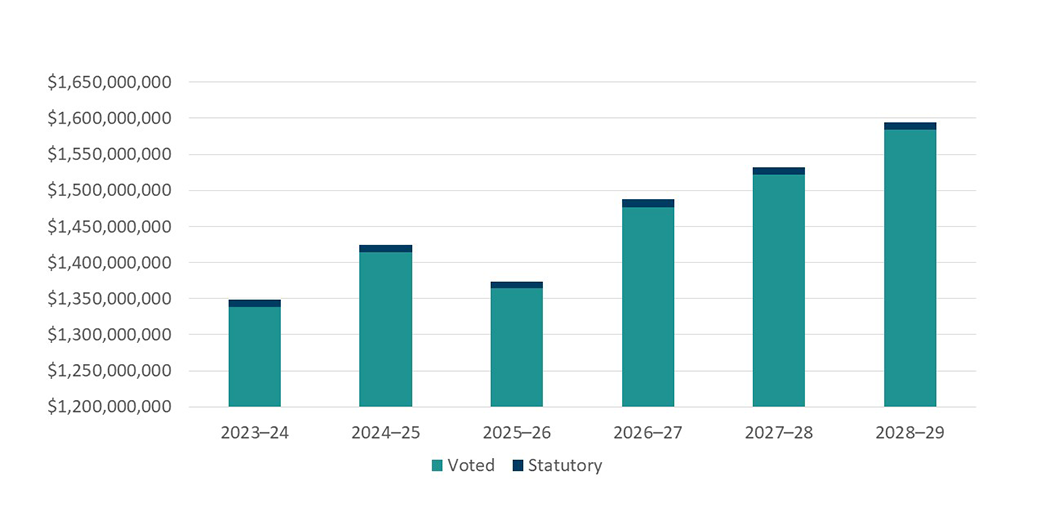
Graph 1: Approved funding (statutory and voted) over a six-year period
Graph 1 summarizes the Agency’s approved voted and statutory funding from 2023-24 to 2028-29.
-
Text version of graph 1
Graph 1 includes the following information in a bar graph:
Fiscal year Statutory Voted Total 2023-24 $10,182,784 $1,338,273,413 $1,348,456,197 2024-25 $9,896,030 $1,414,476,205 $1,424,372,235 2025-26 $8,474,969 $1,364,788,359 $1,373,263,328 2026-27 $10,406,058 $1,476,993,673 $1,487,399,731 2027-28 $10,012,762 $1,521,932,707 $1,531,945,469 2028-29 $10,033,606 $1,584,384,313 $1,594,417,919 -
Analysis of statutory and voted funding over a six-year period
CIHR’s spending is increasing year over year, primarily due to new funding announced in Budget 2024, including increased support to core research grants and the Canada Research Training Awards Suite, as well as from the Budget 2025 funding for the International Research Talent Recruitment. Spending declined in 2025-26 due to the re-profiling of the Clinical Trials Fund (Budget 2021). Since its inception in 2000, and while continuing to deliver an increasing number of funding programs and initiatives, CIHR’s operating budget has remained low, representing less than 6% of its total budget.
Consult the Public Accounts of Canada for further information on CIHR’s departmental voted and statutory expenditures.
Financial statement highlights
This section presents CIHR’s Financial statements (unaudited) for the year ended March 31, 2026.
Table 9: Condensed Statement of Operations (unaudited) for the year ended March 31, 2026 (dollars)
Table 9 summarizes the expenses and revenues for 2025-26, which net to the cost of operations before government funding and transfers.
| Financial information | 2025-26 actual results | 2025-26 planned results | Difference (actual results minus planned) |
|---|---|---|---|
| Total expenses | $1,382,320,292 | $1,384,612,846 | $(2,292,554) |
| Total revenues | $6,001,534 | $5,871,499 | $130,035 |
| Net cost of operations before government funding and transfers | $1,376,318,758 | $1,378,741,347 | $(2,422,589) |
Analysis of expenses and revenues for 2025-26
Overall, CIHR’s actual results align closely with those planned. Total expenses were slightly lower than planned due to a corporate reorganization and broader cost containment measurements undertaken by CIHR during the year, as well as slightly higher returns of prior year grants and awards than expected ($1.1M). Revenues were as expected.
The 2025-26 planned results information is provided in CIHR’s Future-Oriented Statement of Operations and Notes 2025-26.
Table 10: Condensed Statement of Operations (unaudited) for 2024-25 and 2025-26 (dollars)
Table 10 summarizes actual expenses and revenues and shows the net cost of operations before government funding and transfers.
| Financial information | 2025-26 actual results | 2024-25 actual results | Difference (2025-26 minus 2024-25) |
|---|---|---|---|
| Total expenses | $1,382,320,292 | $1,428,495,343 | $(46,175,051) |
| Total revenues | $6,001,534 | $3,831,691 | $2,169,843 |
| Net cost of operations before government funding and transfers | $1,376,318,758 | $1,424,663,652 | $(48,344,894) |
Analysis of differences in expenses and revenues between 2024-25 and 2025-26
CIHR’s expenses consist of transfer payments for grants and awards (93.4%) and operating expenses (6.6%). Revenues are made up of donations from third parties to fund health research.
Grants and awards expenses totaled $1,291.4M, a decrease of $42.1M (3.2%) relative to the prior year. This decline is consistent with the overall reduction in Parliamentary authorities available to CIHR as discussed above.
Total operating expenses were $90.9M in 2025-26, a decrease of $4.1M (-4.3%) compared to 2024-25. This variance was primarily driven by a $6.4M (-7.6%) reduction in salaries and employee benefits, consistent with the impact of CIHR’s corporate reorganization and associated staffing adjustments.
These decreases were partially offset by higher costs in other operating areas, including accommodation following CIHR’s transition to a new office space and incremental office relocation-related expenditures. Professional services and information technology-related expenditures also increased, primarily to support vacant positions in key functional areas during a period of ongoing cost containment, organizational restructuring, and constrained internal IT capacity.
Reductions in rental expenses of $0.7M were also recorded, reflecting ongoing migration to cloud-based services and the associated reduction of legacy infrastructure.
Total actual revenues fluctuate annually as they result from collaborations with external parties to support health research. Recognition of revenues is dependent on the timing of disbursement to health researchers, which is itself conditional on receipt of funding from the partner. In 2025-26, CIHR received $5.7M from external partners and disbursed $6.0M to health researchers ($3.8M was disbursed in the previous fiscal year).
Table 11: Condensed Statement of Financial Position (unaudited) as of March 31, 2026 (dollars)
Table 11 provides a brief snapshot of the amounts the department owes or must spend (liabilities) and its available resources (assets), which helps to indicate its ability to carry out programs and services.
| Financial information | Actual fiscal year (2025-26) | Previous fiscal year (2024-25) | Difference (2025-26 minus 2024-25) |
|---|---|---|---|
| Total net liabilities | $16,143,072 | $16,772,158 | $(629,086) |
| Total net financial assets | $12,750,258 | $12,080,058 | $670,200 |
| Departmental net debt | $3,392,814 | $4,692,100 | $(1,299,286) |
| Total non-financial assets | $3,587,551 | $3,841,869 | $(254,318) |
| Departmental net financial position | $194,737 | $(850,231) | $1,044,968 |
Analysis of Agency’s liabilities and assets since last fiscal year
CIHR’s total net liabilities are made up of accounts payable and accrued liabilities, vacation pay and compensatory leave, deferred revenue as well as accrued employee future benefits. Total liabilities remained largely unchanged from the previous year, with small decreases in vacation pay liability ($0.4M) and deferred revenue ($0.3M) offset by minor variances in other balances.
Net financial assets, which include amounts due from the Consolidated Revenue Fund and accounts receivable and advances, remained largely unchanged from the prior year, as a $1.0M increase in accounts receivable due to a large receivable from another government department was largely offset by a $0.3M decrease in amounts due from the Consolidated Revenue Fund.
CIHR’s non-financial assets, which include prepaid expenses and tangible capital assets, decreased by $0.3M primarily due to annual amortization of capital assets ($0.5M), partially offset by additions to tangible capital assets and prepaid expenses ($0.1M each).
Human resources
This section presents an overview of the Agency’s actual and planned human resources from 2023-24 to 2028-29.
Table 12: Actual human resources for the core responsibility and internal services for the last three years
Table 12 shows a summary in full-time equivalents of human resources for CIHR’s core responsibility and for its internal services for the previous three fiscal years.
| Core responsibility and internal services | 2023-24 actual full-time equivalents | 2024-25 actual full-time equivalents | 2025-26 actual full-time equivalents |
|---|---|---|---|
| Funding health research and training | 327 | 298 | 257 |
| Subtotal | 327 | 298 | 257 |
| Internal services | 289 | 264 | 235 |
| Total | 616 | 562 | 492 |
Analysis of human resources for the last three years
The reduction in full-time equivalents from 2023-24 to 2024-25 was due to the wind-down of time-limited initiatives and associated temporary positions. The temporary decrease from 2024-25 to 2025-26 reflects conservative staffing decisions taken during CIHR’s organizational review.
Table 13: Human resources planning summary for the core responsibility and internal services for the next three years
Table 13 shows the planned full-time equivalents for each of CIHR’s core responsibility and for its internal services for the next three years. Human resources for the current fiscal year are forecast based on year to date.
| Core responsibility and internal services | 2026-27 planned full-time equivalents | 2027-28 planned full-time equivalents | 2028-29 planned full-time equivalents |
|---|---|---|---|
| Funding health research and training | 289 | 263 | 264 |
| Subtotal | 289 | 263 | 264 |
| Internal services | 245 | 245 | 242 |
| Total | 534 | 508 | 506 |
Analysis of human resources for the next three years
Full-time equivalents are expected to decline from 2026-27 to 2027-28 as time-limited initiatives and associated temporary positions are phased out and are expected to remain relatively stable between 2027-28 and 2028-29.
Supplementary information tables
The following supplementary information tables are available on CIHR’s website:
Federal tax expenditures
The tax system can be used to achieve public policy objectives through the application of special measures such as low tax rates, exemptions, deductions, deferrals and credits. The Department of Finance Canada publishes cost estimates and projections for these measures each year in the Report on Federal Tax Expenditures.
This report also provides detailed background information on tax expenditures, including descriptions, objectives, historical information and references to related federal spending programs as well as evaluations and GBA Plus of tax expenditures.
Corporate information
-
Departmental profile
Appropriate minister:
The Honourable Marjorie Michel, P.C., M.P., Minister of Health
Institutional head:
Dr. Paul Hébert, President
Ministerial portfolio:
Health
Enabling instrument:
Canadian Institutes of Health Research Act (S.C. 2000, c. 6)
Year of incorporation / commencement:
2000
-
Departmental contact information
Mailing address:
Canadian Institutes of Health Research
234 Laurier Ave West
Address Locator 4809A
Ottawa, Ontario K1A 0K9Telephone:
613-954-1968
TTY:
1-888-603-4178
Email:
support-soutien@cihr-irsc.gc.ca
Website:
Definitions
List of terms
- appropriation (crédit)
- Any authority of Parliament to pay money out of the Consolidated Revenue Fund.
- budgetary expenditures (dépenses budgétaires)
- Operating and capital expenditures; transfer payments to other levels of government, departments or individuals; and payments to Crown corporations.
- core responsibility (responsabilité essentielle)
- An enduring function or role of a department. The departmental results listed for a core responsibility reflect the outcomes that the department seeks to influence or achieve.
- Departmental Plan (plan ministériel)
- A report that outlines the anticipated activities and expected performance of an appropriated department over a three-year period. Departmental Plans are usually tabled in Parliament in spring.
- departmental priority (priorité)
- A plan, project or activity that a department focuses and reports on during a specific planning period. Priorities represent the most important things to be done or those to be addressed first to help achieve the desired departmental results.
- departmental result (résultat ministériel)
- A high-level outcome related to the core responsibilities of a department.
- departmental result indicator (indicateur de résultat ministériel)
- A quantitative or qualitative measure that assesses progress toward a departmental result.
- departmental results framework (cadre ministériel des résultats)
- A framework that connects the department’s core responsibilities to its departmental results and departmental result indicators.
- Departmental Results Report (rapport sur les résultats ministériels)
- A report outlining a department’s accomplishments against the plans, priorities and expected results set out in the corresponding Departmental Plan.
- Full-time equivalent (équivalent temps plein)
- Measures the person years in a departmental budget. An employee's scheduled hours per week divided by the employer's hours for a full-time workweek calculates a full-time equivalent. For example, an employee who works 20 hours in a 40-hour standard workweek represents a 0.5 full-time equivalent.
- Gender-based Analysis Plus (GBA Plus) (analyse comparative entre les sexes plus [ACS Plus])
- An analytical tool that helps to understand the ways diverse individuals experience policies, programs and other initiatives. Applying GBA Plus to policies, programs and other initiatives helps to identify the different needs of the people affected, the ways to be more responsive and inclusive, and the methods to anticipate and mitigate potential barriers to accessing or benefitting from the initiative. GBA Plus goes beyond biological (sex) and socio-cultural (gender) differences to consider other factors, such as age, disability, education, ethnicity, economic status, geography (including rurality), language, race, religion, and sexual orientation.
- government priorities (priorités gouvernementales)
- For the purpose of the 2025-26 Departmental Results Report, government priorities are the high-level themes outlining the government’s agenda as announced in the 2025 Speech from the Throne.
- horizontal initiative (initiative horizontale)
- A program, project or other initiative where two or more federal departments receive funding to work collaboratively on a shared outcome usually linked to a government priority, and where the ministers involved agree to designate it as horizontal. Specific reporting requirements apply, including that the lead department must report on combined expenditures and results.
- Indigenous business (entreprise autochtone)
- Requirements for verifying Indigenous businesses for the purposes of the departmental result report are available through the Indigenous Services Canada Mandatory minimum 5% Indigenous procurement target website.
- non-budgetary expenditures (dépenses non budgétaires)
- Net outlays and receipts related to loans, investments and advances, which change the composition of the financial assets of the Government of Canada.
- performance (rendement)
- What a department did with its resources to achieve its results, how well those results compare to what the department intended to achieve, and how well lessons learned have been identified.
- performance indicator (indicateur de rendement)
- A qualitative or quantitative measure that assesses progress toward a departmental-level or program-level result, or the expected outputs or outcomes of a program, policy or initiative.
- plan (plan)
- The articulation of strategic choices, which provides information on how a department intends to achieve its priorities and associated results. Generally, a plan will explain the logic behind the strategies chosen and tend to focus on actions that lead to the expected result.
- planned spending (dépenses prévues)
- For Departmental Plans and Departmental Results Reports, planned spending refers to the amounts presented in Main Estimates. Departments must determine their planned spending and be able to defend the financial numbers presented in their Departmental Plans and Departmental Results Reports.
- program (programme)
- An Individual, group, or combination of services and activities managed together within a department and focused on a specific set of outputs, outcomes or service levels.
- program inventory (répertoire des programmes)
- A listing that identifies all the department’s programs and the resources that contribute to delivering on the department’s core responsibilities and achieving its results.
- result (résultat)
- An outcome or output related to the activities of a department, policy, program or initiative.
- statutory expenditures (dépenses législatives)
- Spending approved through legislation passed in Parliament, other than appropriation acts. The legislation sets out the purpose and the terms and conditions of the expenditures.
- target (cible)
- A quantitative or qualitative, measurable goal that a department, program or initiative plans to achieve within a specified time period.
- voted expenditures (dépenses votées)
- Spending approved annually through an appropriation act passed in Parliament. The vote also outlines the conditions that govern the spending.
- Date modified: