Canadian Research Initiative in Substance Matters (CRISM)
Intervention for substance use harm is a pressing and complex health issue. To be truly effective, it requires evidence-based approaches, an understanding of biological, psychosocial, and social factors, and an acknowledgement of the important impact of cultural and societal contexts. Many intervention approaches exist and are known to have excellent results, yet they have not been widely implemented.
In response, the CIHR Institute of Neurosciences, Mental Health and Addiction (INMHA) launched the Canadian Research Initiative in Substance Matters (CRISM), a national research consortium in substance use modeled in part on the US National Institute on Drug Abuse’s (NIDA) Clinical Trials Network (CTN).
When it launched in 2015, CRISM was jointly funded by CIHR-INMHA and the Government of Canada's National Anti-Drug Strategy. In 2016, the Minister of Health announced an updated drug strategy for Canada: The Canadian Drugs and Substances Strategy (CDSS) to replace the National Anti-Drug Strategy.
CRISM originally consisted of four large regional teams, known as Nodes, made up of researchers, service providers, decision makers and people with lived and living experience. Nodes can function independently and/or in concert on studies related to substance use. In 2022, the Government of Canada, provided $17 million in new funding through CIHR to support the next phase of CRISM. The funding expanded CRISM to five regional Nodes, creating separate Nodes for Quebec and Atlantic Canada. It also supports a national study on methamphetamine use disorder.
In 2024, the Honourable Ya'ara Saks, Minister of Mental Health and Addictions and Associate Minister of Health, announced an investment of $6 million through the Canadian Institutes of Health Research (CIHR) and the Canadian Drugs and Substances Strategy (CDSS) to expand and increase the impact of the Canadian Research Initiative on Substance Matters (CRISM). This new funding includes $4 million to create a Network Coordinating Centre and $2 million to develop an Indigenous Engagement Platform that will work collaboratively across the research network.
CRISM Nodes and their Node Leads
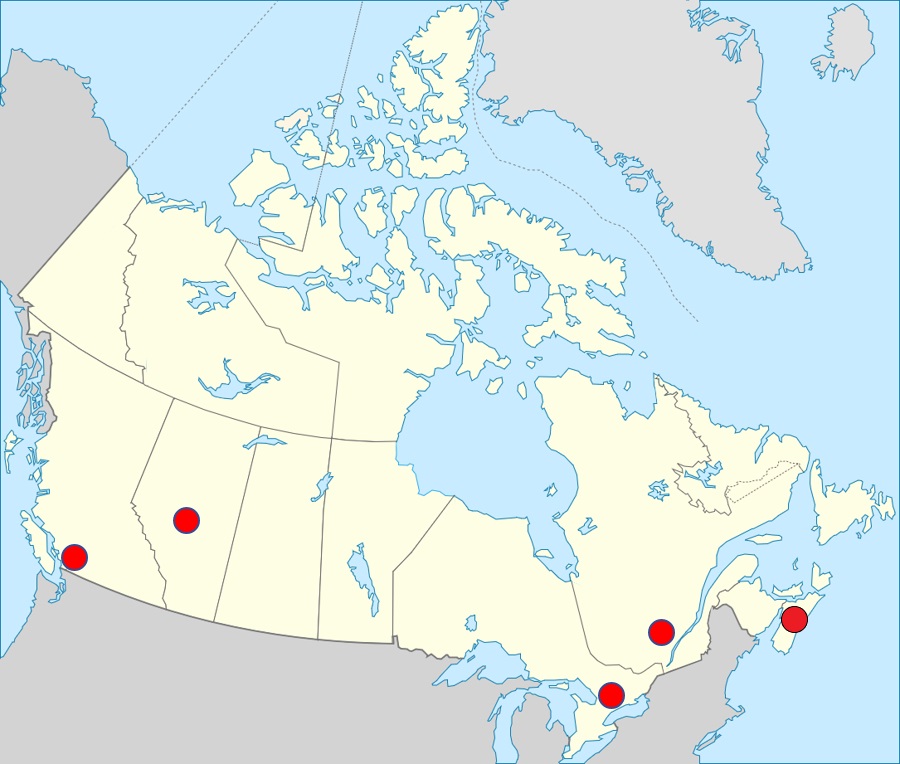
The CRISM Network Leads are:
- British Columbia Node – Dr. Eugenia Socías; (Dr. Evan Wood, sabbatical)
- Ontario Node – Dr. Farihah Ali
- Prairies Node – Dr. Elaine Hyshka
- Québec (French only) Node – Dr. Didier Jutras-Aswad
- Atlantic Node – Dr. Sherry Stewart
- Coordinating Centre - Dr. David Hodgins
- Indigenous Engagement Platform – Dr. Robert Henry
Please note the websites for each CRISM Node are run by the CRISM Network and may be available in English only.

- Date modified: