The 2026 CIHR Institute of Aging Fellowship Prize of Excellence in Research on Aging
Each year, the Canadian Institutes of Health Research - Institute of Aging (CIHR-IA) recognizes the highest ranked postdoctoral trainee in the field of aging from the CIHR open postdoctoral competition as the CIHR-IA Fellowship Prize of Excellence in Research on Aging recipient.
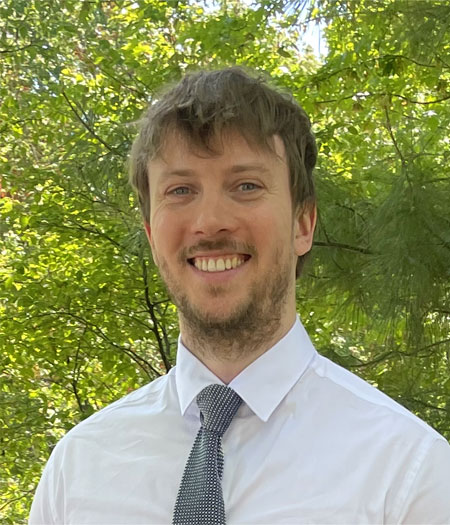
Dr. Daniel Andrews, McGill University
Dr. Daniel Andrews is a CIHR-funded Postdoctoral Fellow with Prof. Louis Collins at McGill University's Montreal Neurological Institute. His PhD in Biological and Biomedical Engineering at McGill produced Digital Twin software that makes Alzheimer's disease clinical trials faster and better powered across patient populations. Dr. Andrews aims to accelerate treatment development for neurological disorders through patient-centred research at the intersection of disease modelling, computer science, and clinical trial analysis.
Research summary
Cognitive decline in Alzheimer's disease results from decades of brain pathology buildup and genetic, clinical, and environmental risk factors. Digital Twin models can predict progression, helping clinicians choose treatments, patients plan, and clinical trials increase power. However, most such models are mathematical "black boxes" clinicians hesitate to trust. Dr. Andrews is instead developing interpretable models that predict patient progression from that observed in medically similar patients. These models will include demographics, genetics, cognition, and neuroimaging atrophy biomarkers to improve accuracy over existing models, with validation in thousands of patients. Paired with novel analysis techniques in real-world Canadian Alzheimer's trials, the models will reduce sample sizes and enable targeted subgroup testing.
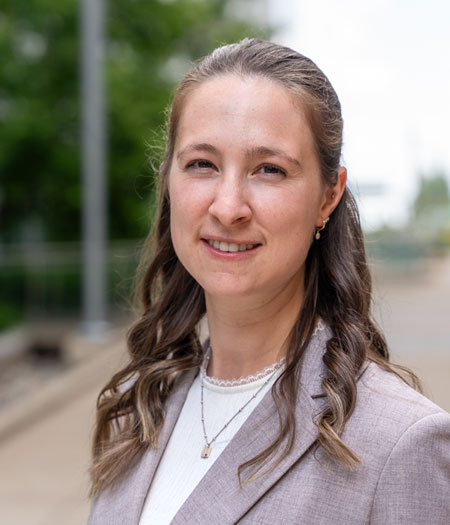
Dr. Caroline Dallaire-Théroux, University of Calgary
I am a Quebec-trained, board-certified neurologist with expertise in cognitive disorders, cerebrovascular disease, and vascular contributions to cognitive impairment and dementia. I completed my adult neurology and clinician-scientist training, as well as a PhD in Neuroscience, at Université Laval. I am currently pursuing a clinical and research fellowship in Cognitive Neurosciences at the University of Calgary, with a particular focus on vascular cognitive impairment and cerebral amyloid angiopathy.
Research summary
My research focuses on understanding how cerebrovascular disease and cerebral amyloid angiopathy interact with Alzheimer's disease to contribute to and accelerate cognitive decline. My work integrates multimodal biomarkers and neuropathology to characterize vascular contributions to cognitive impairment and dementia. Building on my doctoral research in brain aging and cerebral small vessel disease, my current work aims to identify biological signatures that distinguish Alzheimer's disease from mixed forms of dementia involving cerebrovascular pathology. By studying accessible biomarkers of vascular brain injury, I seek to improve early diagnosis, risk stratification, and personalized care, while advancing prevention and treatment strategies to promote healthy cognitive aging.
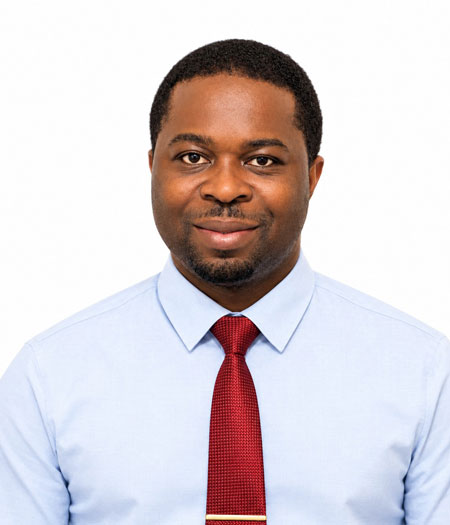
Dr. Ogochukwu Kelechi Onyeso, York University
Dr. Ogochukwu Kelechi Onyeso is a CAnD3 alumnus and postdoctoral fellow at York University, working with Dr. Michael Kalu. He holds a PhD in Population Studies in Health (University of Lethbridge) and received the Governor General's Gold Medal. His research examines intersectional influences on life-course mobility trajectories among older Canadians.
Research summary
Dr. Onyeso integrates musculoskeletal epidemiology and rehabilitation science with longitudinal population data on older, underserved, and racialized groups. Using community-based, co-created design and machine learning, including explainable AI, he examines how social, environmental, and structural factors shape functional outcomes. Drawing on the CLSA, with supplementary CCHS data, he applies SHAP to interpret predictions and resampling methods such as SMOTER to address data imbalance, supporting fairer estimates across subgroups. His goal is a disability-, climate-, and equity-informed dashboard where individuals and communities enter minimal data, receive mobility predictions, and see which modifiable factors could improve their trajectories.
- Date modified: