ICRH Institute Advisory Board Members – Biographies
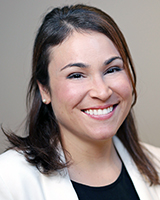
Mireille Ouimet (Co-Chair)
Scientist, Director, Cardiovascular Metabolism and Cell Biology Laboratory, University of Ottawa Heart Institute
Associate Professor, Department of Biochemistry, Microbiology and Immunology, Faculty of Medicine, University of Ottawa
Mireille Ouimet, PhD, is a Scientist and Director of the Cardiovascular Metabolism and Cell Biology Laboratory at the uOttawa Heart Institute and an Associate Professor in the Department of Biochemistry, Microbiology and Immunology, in the Faculty of Medicine at the University of Ottawa. Her research program aims to determine the role of lipophagy in macrophage foam cell metabolism, inflammation and cholesterol trafficking and its linkage to the development and progression of atherosclerosis. Dr. Ouimet holds a Tier 2 Canada Research Chair in cardiovascular metabolism and cell biology.
Dr. Ouimet obtained her BSc and PhD in biochemistry from the University of Ottawa. During her doctoral studies with Yves Marcel, PhD, at the Heart Institute, Dr. Ouimet made several important findings relevant to the cellular pathways of cholesterol removal from foam cells. Her most significant contribution was the discovery of autophagy as a key pathway for macrophage cholesterol efflux.
As a postdoctoral fellow with Kathryn Moore, PhD, at New York University, a notable leader in the fields of innate immunity and atherosclerosis, Dr. Ouimet broadened our understanding of mechanisms leading to predominance of classical M1 inflammatory macrophages in atherosclerotic plaques, cellular cholesterol trafficking and the persistence of M. tuberculosis bacilli in alveolar macrophages.
Dr. Ouimet was awarded a CIHR Vanier Canada Graduate Scholarship and received the Governor General’s Gold Medal in 2011 for her doctoral thesis in recognition of her graduate work, and is the recipient of several presentation awards. She has been recognized by the American Heart Association’s ATVB Council with awards such as the Early Career Award for Outstanding Research and New York University’s Outstanding Postdoctoral Scholar Award. Dr. Ouimet joined the Heart Institute in March 2017. In 2018, Dr. Ouimet received the Daniel Steinberg Early Career Investigator Award, and the CIHR-Canadian Society of Atherosclerosis, Thrombosis and Vascular Biology Early Career Lecturer Award. In 2020, Dr. Ouimet was awarded the Canadian Cardiovascular Society, HSRLCE, BI-Lilly Cardiometabolic Award.
Dr. Ouimet’s program is funded by NSERC, the Canadian Institutes of Health Research, the Heart and Stroke Foundation, and the Canada Foundation for Innovation.
Dr. Ouimet’s research program focuses on cellular cholesterol trafficking and the role of autophagy in macrophage foam cell metabolism, inflammation and lipid homeostasis and how modulating these pathways might be used to treat heart disease.
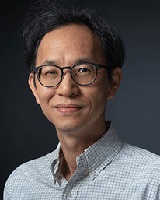
Dennis T. Ko, MD, MSc, FRCPC (Co-Chair)
Professor, Department of Medicine, University of Toronto
Senior Scientist, Sunnybrook Research Institute
Senior Scientist, ICES
Interventional Cardiologist, Schulich Heart Centre, Sunnybrook Hospital
Dr. Dennis Ko obtained his MD from the University of Ottawa and completed medical residency at the Cleveland Clinic Foundation and cardiology fellowship at Yale University School of Medicine. He then completed interventional cardiology fellowship and Master of Clinical Epidemiology at the University of Toronto.
He is a Full Professor in the Department of Medicine at the University of Toronto, a Senior Scientist at the Sunnybrook Research Institute and at ICES. He works clinically as an interventional cardiologist at the Schulich Heart Centre at Sunnybrook Hospital. He is also the Research Program Director and the inaugural Jack Tu Research Chair for Cardiovascular Outcomes Research.
His research focuses on determining optimal clinical strategies and identifying opportunities for improvement in the prevention, treatment and outcome of cardiovascular disease. These research efforts are intended to provide critical information to improve the quality of health care, monitor changes over time, and guide decisions about the allocation of scarce health care resources. Dr. Ko has published more than 300 peer-reviewed publications. He is currently a leadership member in the American Heart Association Quality and Outcomes Committee.
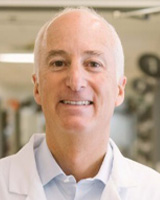
Shawn Aaron, MD
Professor, Department of Medicine, University of Ottawa
Senior Scientist, Ottawa Hospital Research Institute
Dr. Shawn Aaron is a Professor in The Department of Medicine, The University of Ottawa and a Senior Scientist at the Ottawa Hospital Research Institute. Dr. Aaron is a Respirologist at The Ottawa Hospital. He conducts clinical and health services research focused in 3 respiratory diseases: COPD, asthma and cystic fibrosis, with a special interest in early diagnosis and treatment of obstructive lung diseases.
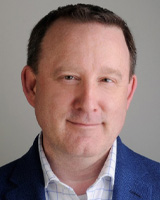
Jason Acker, MBA, PhD, FCAHS
Senior Scientist, Canadian Blood Services
Professor, Department of Laboratory Medicine and Pathology, University of Alberta
Dr. Jason Acker MBA PhD FCAHS is a Senior Scientist with the Canadian Blood Services and a Professor in the Department of Laboratory Medicine and Pathology at the University of Alberta. He currently serves as the Associate Vice President (Research Integrity Support) in the University of Alberta's Office of the Vice President Research and Innovation. He received his Bachelor of Science, Master of Science in Experimental Pathology, Master of Business Administration in Technology Commercialization, and Doctor of Philosophy in Medical Sciences degrees from the University of Alberta. His research program focuses on understanding the response of cells, tissues and organs to ex vivo storage and the development of methods for their preservation and use as therapeutic products.
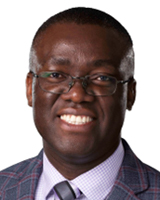
Ejaife Agbani, BPharm, MSc, PhD
Assistant Professor, Physiology and Pharmacology, University of Calgary
Dr. Ejaife Agbani earned his Bachelor of Pharmacy degree (with Distinction) from Obafemi Awolowo University in Nigeria and qualified as a pharmacist. Later, he earned a master’s in clinical pharmacy degree (with Distinction) from University College London, England. He then studied peroxynitrite chemistry and its cellular actions in pulmonary hypertension at Strathclyde University in Glasgow, Scotland, where he obtained his PhD in 2010. After a post-doctoral research investigating the role of nuclear invaginations and endo-lysosomal channels in calcium signalling at the University of Edinburgh, Scotland, Dr. Agbani (in 2012) joined a platelet secretion lab at the University of Bristol, England. Here, Ejaife carved out an area of research combining 4D advanced imaging science with novel approaches targeting procoagulant membrane dynamics to control platelet procoagulation without blocking platelet secretions. Since then, Dr. Agbani’s work has centred on platelet biology, thrombosis and haemostasis cell biology, advanced imaging science, and haematological innovations. Dr. Agbani’s research seeks to understand platelets’ role in post-operative thrombo-haemorrhagic complications, drug and cancer-associated thrombosis, and prothrombo-inflammatory disease states. His research goal is to provide critical insights into thrombosis mechanisms and the haemostatic response through platelet biology and to leverage this knowledge for precision medicine.

Sudi Barre, BEc (she/her)
Edmonton, Alberta
Patient with Lived Experience, Wellness Coach
Key statement
Mother, wife, wellness and small business coach, expert in barriers to access to health care for minorities, woman with lived experience, advocate for sex and gender equity in care, speaker, blogger.
Lived experience
Person who experienced spontaneous coronary artery dissection and who is a heart and stroke survivor. Individual who has expert knowledge on navigating childhood trauma and complex post-traumatic stress disorder.
Professional experience
Consultant with 15+ years of expertise spanning organizational development; fostering community based ecosystems in community service agencies. Specialized in small business operational leadership and management.
Key areas of interest in advocacy
Equity-oriented health care. Patient-partnered inclusive care. Patient knowledge equity. Health research design, selection and convenience bias as well as sex- and gender-based analysis and reporting.
What I hope to bring to the Patient Voice
Passion for team collaboration. Commitment to work toward greater patient-partnered care. Dedication to ongoing learning and development.
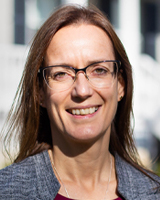
Kerstin de Wit, MD
Professor
Department of Emergency Medicine
Queen’s University, Kingston, Ontario
Kerstin de Wit works clinically as an emergency physician and a thrombosis physician in Kingston Health Sciences Centre. She is an Associate Professor in the Department of Emergency Medicine, cross appointed to the Department of Medicine. Her research focuses on testing for venous thromboembolism and intracranial bleeding in the emergency department environment.

Andrea Gershon, MD, FRCPC, MSc
Respirologist, Sunnybrook Health Sciences Centre
Professor of Medicine, University of Toronto
Scientist, Sunnybrook Research Institute and ICES
Dr Andrea Gershon is Professor, Respirologist and a Senior Scientist at Sunnybrook Health Sciences Centre and University of Toronto. Her award-winning research and knowledge translation program has produced many high impact, peer-reviewed articles. She has been an invited speaker at international meetings, universities, and medical centres worldwide. Her work is used by government and non-profit organizations to inform local and international guidelines and policy.
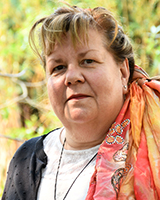
Alexandra King, MD, FRCPC
Cameco Chair, Indigenous Health and Wellness, University of Saskatchewan
Dr. Alexandra King is a member of Nipissing First Nation (Ontario). She is an Internal Medicine Specialist with a focus on HIV/AIDS, hepatitis C (HCV) and HIV/HCV co-infections.
Alexandra is the Cameco Chair in Indigenous Health and Wellness at the University of Saskatchewan and co-leads Pewaseskwan (the Indigenous Wellness Research Group). She works with Indigenous communities and relevant stakeholders to understand the health and wellness needs of First Nations and Métis peoples and the structural changes needed for improved Indigenous health outcomes. Alexandra brings leadership skills in culturally safe and responsive research and care, reconciliation, etuaptmumk(Two-eyed Seeing), which brings together Indigenous and Western worldviews or forms of knowledge, and Ethical Space—which needs to be created when peoples with disparate worldviews engage with each other. She is a leader in developing Indigenous research methodology and was instrumental in the creation of the Indigenous Community Research Partnerships Training Resource through Queen’s University.
She serves on many initiatives, including the CIHR HIV/AIDS and STBBI Research Advisory Committee, the Canadian Network on Hepatitis C (CanHepC) and the Indigenous Peoples’ Engagement and Research Council (IPERC), which provides guidance to health research projects including the Cardiac Arrhythmia Network of Canada (CANet) and the Canadian Heart Function (CHF) Alliance, both of which Pewaseskwan is involved with. Another project she is involved with is research into spinal-bulbar muscular atrophy (SBMA), also known as Kennedy’s Disease, which impacts Indigenous people at much higher-than-average rates.
Alexandra supervises graduate students at Simon Fraser University and the University of Saskatchewan, focusing on wellness intervention research with Indigenous people in the areas of land-based healing, health determinants, mental health and addiction, blood-borne and sexually transmitted infections and justice health (prisoner health).
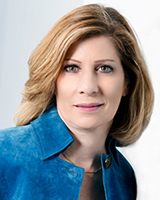
M. Patrice Lindsay, RN, M.Ed., PhD, FWSO
Health Systems and Engagement Consultant
MarcLind Health Systems Consulting
Dr. Patrice Lindsay is a distinguished leader in stroke, brain, and heart health, acknowledged for her transformative work in designing and implementing stroke systems of care across the continuum and across Canada. As a clinical leader, advocate, and researcher, she has pioneered efforts to enhance care delivery, focusing on systems of care, prevention, and recovery through a performance measurement and continuous quality improvement lens. Dr. Lindsay has played a key role in developing strategic frameworks for stroke, heart failure and congenital heart disease. A passionate advocate for the active involvement of individuals with lived experience in healthcare, Dr. Lindsay champions their engagement in research, health systems design, clinical care, education, and advocacy. She has a special interest in advancing women’s heart and brain health. Dr. Lindsay is a recipient of the World Stroke Organization 2024 Award for Stroke Services and Queen Elizabeth II Diamond Jubilee medal. She has authored and co-authored over 125 peer-reviewed papers and is a co-investigator on several research initiatives.
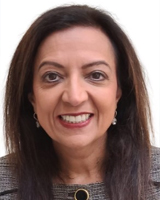
Indra Narang, BMedSci, MBBCH, MD
Professor of Paediatrics, University of Toronto
Senior Scientist, SickKids Research Institute
Associate Chair, Faculty Development, Equity, Diversity and Inclusion, Hospital for Sick Children
Dr Indra Narang completed medical school in the UK following which she undertook paediatric respiratory fellowship training at the Royal Brompton Hospital and Great Ormond Street Hospital, U.K. and Sleep medicine training at the Children’s Hospital of Philadelphia. She completed her research training and doctoral thesis at the University of London, U.K. In 2007, she was appointed as Faculty in the Division of Respiratory Medicine and Director of Sleep Medicine at the Hospital for Sick Children.
Dr Narang is nationally and internationally recognized for her paediatric sleep leadership in both the clinical and research arenas where she was the paediatric lead and an executive member of the Canadian Sleep and Circadian Network. Her current research focuses on innovative diagnostics for childhood obstructive sleep apnea (OSA) as well as the evaluation of effective and novel therapeutic interventions for the management of OSA. She has published more than 100 peer-reviewed papers and her translational research program in sleep disorders in children has generated evidence that has resulted in excellence in clinical care. Dr Narang’s lab supports many graduate and postgraduate trainees and is currently funded by CIHR as well as the PSI foundation.
In 2019, Dr Narang was appointed as the inaugural Associate Chair of Faculty Development, Equity, Diversity and Inclusion (EDI). In this role, Dr Narang has been instrumental in using a data driven approach for capacity building and implementing strategies that foster a diverse and inclusive environment in clinical care and research and her work was recently published in NEJM.

Nishita Singh, MD, DM, MSc
Stroke Neurologist
Assistant Professor, Neurology, University of Manitoba
Clinical Stroke Research Chair, Heart & Stroke & Research Manitoba
Dr. Nishita Singh, a stroke neurologist and clinical researcher at the University of Manitoba, is an Assistant Professor and the Heart & Stroke & Research Manitoba Chair and the Research Manitoba Chair in Clinical Stroke Research. Dr. Nishita Singh completed her medical education and neurology residency at the All India Institute of Medical Sciences. From 2019 to 2022 she held a stroke fellowship at the University of Calgary, where she was recognized as chief stroke fellow. Singh has published extensively in the area of stroke treatment and has been involved in large clinical trials such as the AcT Trial, which led to change in clinical guidelines within Canada and globally for treatment of patients with acute stroke. In Calgary, Singh received the 2021 Foothills Medical Centre Physician of the Year Award for a resident or fellow, recognizing her outstanding contributions during the pandemic. She was the fellow lead for the Canadian Stroke Consortium and currently is the Deputy Chair- Research for the Canadian Stroke Consortium. She is a principal investigator on StrokeCog, an equity, diversity, inclusivity and accessibility-centred training platform funded by the Canadian Institutes of Health Research. StrokeCog is developing a new generation of diverse stroke clinical trial leaders, with the goal of conducting more inclusive trials. She is also principal investigator for a study on carotid disease funded by Brain Canada. She is the site principal investigator for several large clinical trials. Her primary interest is in carotid artery disease, which encompasses multiple disease states like narrowing or tearing within the carotid artery, increasing the risk of stroke across all ages. She envisions running a large, real-world clinical trial related to carotid artery disease.
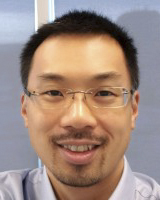
Charles Tam
Director of Regulatory Affairs & member of Canadian Leadership Team, Edwards Lifesciences
Charles Tam is the Director of Regulatory Affairs and a member of Canadian Leadership Team at Edwards Lifesciences in Canada. He joined Edwards Lifesciences in 2014 and previously held progressive regulatory leadership roles at Abbott Laboratories, Johnson & Johnson Medical Companies, and Becton-Dickinson and Company Inc.
Bridging experiences across academia, government, and the private-sector, Charles is passionate about enabling greater access to clinical research and medical technology innovation for all Canadians. He is a Sub-Committee Chair and Regulatory Affairs Steering Committee member at MedTech Canada, and is an Advisor at the University of Toronto's Health Innovation Hub (H2i), part of the Temerty Faculty of Medicine. Previously, he has served as a Councillor on the Coronary Artery and Vascular Disease council at the Heart and Stroke Foundation of Canada, previously retained on the roster of experts for Investigational Testing by Health Canada's Health Products and Food Branch, and previously served as an elected Senator on the Toronto Metropolitan University's Senate (formerly Ryerson University).
Charles obtained his MBA at the Toronto Metropolitan University (formerly Ryerson University) and holds a Honours BSc from the University of Toronto.

Azadeh Yadollahi, PhD
Associate Professor, Institute of Biomedical Engineering, University of Toronto
Canada Research Chair - Tier 2, Cardio-Respiratory Engineering
Dr. Yadollahi holds a Canada Research Chair-Tier 2 in Cardio-Respiratory Engineering, is a Senior Scientist at the University Health Network’s KITE research institute (UHN-KITE), an Associate Professor at the University of Toronto's Institute of Biomedical Engineering, and an adjunct faculty at the University of Manitoba. Dr. Yadollahi is Director of FabrIc-Based REsearch (FIBRE) platform, with the vision to deliver revolutionary textile-based wearables for providing equitable access to healthcare, wherever users are. Dr. Yadollahi is a strong advocate for inclusive research and practices, and has chaired the UHN-Research Inclusion, Diversity, Equity, and Accessibility (IDEA) Committee (2020-2025). Globally, she is the 2025 IEEE Engineering in Medicine and Biology Society’s Distinguished Lecturer. She is also a member of the World Health Organization (WHO)’s inaugural Disability Health Equity Network.
Dr. Yadollahi’s research is focused on developing digital technologies to provide equitable access to healthcare for people with cardio-respiratory disorders. At UHN-KITE, Dr. Yadollahi leads the SleepdB laboratory, which includes state-of-the-art technologies to examine the intricate interplay between body fluid and cardio-respiratory disorders. SleepdB has gold standard clinical equipment to assess sleep and cardio-respiratory function. Moreover, through special infrastructure that enables full control of lighting and acoustics, SleepdB can realistically simulate home or in-hospital environments for technology development and validation. Dr. Yadollahi leads and co-leads several national initiatives to train the next generation of researchers and innovators to design digital technologies to promote access to care for older adults.
- Date modified: