2026 Maud Menten Prize recipients
Kenji Sugioka
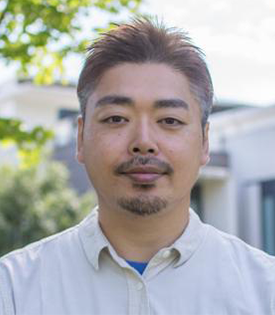
Dr. Kenji Sugioka is an Associate Professor at the University of British Columbia. He received his BSc and MSc from the University of Tokyo and his PhD from Kobe University, conducting his doctoral research at RIKEN. He then completed postdoctoral training at the University of Oregon.
Dr. Sugioka’s research focuses on understanding how cell division is controlled during animal development. His lab combines live imaging, genetics, tissue engineering and image analysis to investigate the fundamental mechanisms that regulate cell division and shape tissues and organs. Using Caenorhabditis elegans (C. elegans) embryos as a model, his team studies how cells establish asymmetry during cytokinesis–the final stage of cell division, when one cell divides into two.
In his CIHR-funded project, his team will investigate how Wnt signalling, an important pathway in development and diseases such as cancer, regulates the movement of proteins across the cell surface to control this process. By uncovering the fundamental mechanisms that regulate asymmetric cell division, this research could improve our understanding of diseases associated with disrupted cell division, including cancer and congenital disorders.
Dr. Sugioka is a recipient of the Maud Menten New Principal Investigator Prize in Genetics (Spring 2026) for the project titled: Elucidating the Mechanism and Function of Cortical Flow in Wnt-dependent Asymmetric Cell Division.
Learn more:
Britt Drögemöller
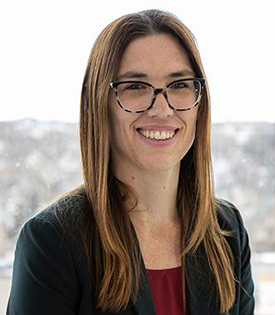
Dr. Britt Drögemöller is an Associate Professor in the Department of Biochemistry and Medical Genetics at the Max Rady College of Medicine, University of Manitoba, and holds a Tier 2 Canada Research Chair in Pharmacogenomics and Precision Medicine. She received her PhD from Stellenbosch University in South Africa in 2013 and completed a postdoctoral fellowship at the University of British Columbia before joining the University of Manitoba in 2020.
Dr. Drögemöller’s research program uses genomics, bioinformatics, and single-cell approaches to better understand how genetic differences influence human health and responses to medications. Her lab has a particular interest in the genetic factors underlying drug-induced and age-related hearing loss. Her team aims to better understand the hereditary factors contributing to these conditions, with the goal of improving the quality of life of the 1.5 billion people around the world who experience hearing loss.
Her team focuses on children, older adults and other underrepresented populations and explores how genetic information can be used to predict which medications are most likely to be safe and effective for each individual before treatment begins. This work could help identify and develop therapies that maximize benefits while minimizing harm, ultimately advancing the implementation of precision medicine.
Dr. Drögemöller is a recipient of the Maud Menten New Principal Investigator Prize in Genetics (Spring 2026) for the project titled: Examining cisplatin-induced ototoxicity at single-cell resolution: Towards improved prediction and prevention.
Learn more:
- Drögemöller Lab Website
- Video–Dr. Britt Drögemöller - Rady Researchers
- Video–Dr. Britt Drögemöller: Tier 2 CRC in Pharmacogenomics & Precision Medicine
Stephanie Protze
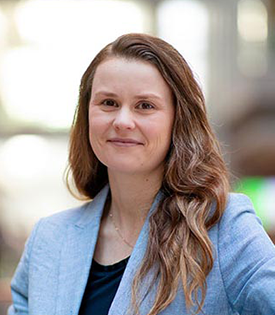
Dr. Stephanie Protze is an Assistant Professor in the Department of Molecular Genetics at the University of Toronto and a Scientist at the McEwen Stem Cell Institute at University Health Network (UHN). She received her Bachelor of Science in Molecular Biotechnology from Dresden University of Technology in Germany and her PhD in Cell Biology and Biomedicine from the University of Dresden. She completed postdoctoral training at the McEwen Centre for Regenerative Medicine at UHN before establishing her independent research group in 2018.
Dr. Protze’s research focuses on understanding human heart development and developing regenerative therapies for cardiovascular disease. Her lab uses human pluripotent stem cells alongside approaches in cell biology, molecular genetics, genomics and electrophysiology to study how cardiac pacemaker cells develop and function. A major focus of her research is generating cardiac pacemaker cells from stem cells to better understand the heart’s electrical conduction system, model pacemaker diseases, and explore the potential of cell-based biological pacemakers as an alternative to electronic devices.
In her CIHR-funded project, Dr. Protze’s team is addressing the poor survival and integration of stem cell-derived tissues following transplantation. Using the heart as a model, the team will investigate how human genes influence cell survival and identify genetic changes that could help transplanted cells survive and integrate into damaged tissue. By improving cell engraftment, this research could help advance regenerative therapies for cardiovascular disease and potentially other degenerative diseases.
Dr. Protze is a recipient of the Maud Menten New Principal Investigator Prize in Genetics (Spring 2026) for the project titled: Breaking through ENGRAFTment barriers with cell therapy functional genomics.
Learn more:
- Date modified: