Indigenous Gender and Wellness Initiative
In Canada, Indigenous Peoples' (First Nations, Inuit, and Métis) understandings of gender and its role in health and wellness have been disrupted by colonial policies and frameworks. As a result, the critical relationship between Indigenous understandings of gender and wellness has been under-examined in health research, with limited opportunities to share, mobilize, and build on existing and emerging knowledges about gender and wellness in ways that can support meaningful change.
We want to know: What might be possible if we paid closer attention to gender in all its forms? How might this strengthen wellness among Indigenous Peoples?
This guiding question led to the creation of the Indigenous Gender and Wellness (IGW) Initiative, which supports the development and implementation of Indigenous-led and community-based projects examining the health and wellbeing of First Nations, Inuit, and/or Métis Peoples through a gendered lens.
The IGW initiative was designed to address the need for health research that is gender-inclusive and incorporates culturally grounded approaches that reflect the lived experiences, identities, and knowledge systems of Indigenous Peoples. This initiative directly aligns with IGH's Research Priority Plan 2024-2029, specifically Priority 3 - Investing in Sex and Gender Research for Health Equity, which includes a focus on gender and health within Indigenous communities.
This initiative is co-led with the CIHR Institute of Indigenous Peoples' Health, reflecting a shared commitment to Indigenous-led, gender-inclusive health research.
Indigenous Gender and Wellness Development Grants (Phase 2)
This funding opportunity is the second phase of a larger initiative on the topic of Indigenous Gender and Wellness. The first phase supported individuals to attend an Idea Fair and Learning Circle event in June of 2019 through a travel award. At the Idea Fair, Indigenous individuals and allies shared ideas on Indigenous gender and wellness with supporters to work together in growing ideas into potential projects. This second phase, Indigenous Gender and Wellness Development Grants, is intended to support those who attended the Idea Fair to continue working on and sharing their ideas, enabling them to develop relationships and plan for the following phase of funding, which is being planned to provide teams with resources to implement their ideas through action-oriented, community-based participatory projects that will improve wellness for Indigenous Peoples from a gendered perspective.
Funds available
- The total amount available for this funding opportunity is $1,680,000, enough to fund approximately twenty two (22) or more grants. The maximum amount per grant is $75,000 for up to one (1) year.
- The CIHR – HIV/AIDS and STBBI Research Initiative: Community-Based Research Program – Indigenous Stream will support up to $150,000 (of the $1,680,000 total).
Objectives
This funding opportunity is expected to:
- Support planning activities that establish priorities for Indigenous-led research projects related to gender and wellness;
- Facilitate relationship building, knowledge sharing and learning that develop and strengthen Indigenous-led, community-based projects; and
- Support the continued development of ideas and plans to implement action-oriented, community-based projects that will improve wellness among Indigenous communities from a gendered perspective.
The request for applications is now closed.
Awardees
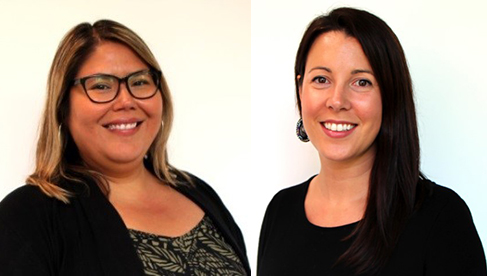
Krystine Abel and Laura Gagnon
Knowledge Circles to Understand Indigenous 2SLGBTQ Inclusion in the Mental Health and Addictions System in Ontario: Dialogues to Explore a 2SLGBTQ Training Program
Principal Investigator: Krystine Abel
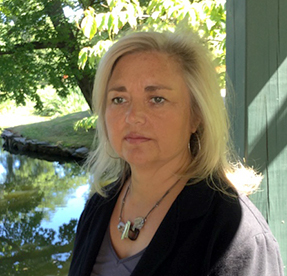
Engaging Inuit Concerning Perinatal Health & Wellness: Developing Insights, Interests and an Approach to Action
Principal Investigator: Gail Baikie
Learning Through Dialogue: Effects of Alcohol on Health and Wellbeing in Indigenous Communities
Principal Investigator: Tamara S Bodnar
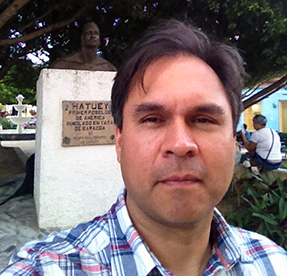
Explore, Map, and Develop a Plan for Programming Geared Towards Building and Strengthening Healthy Relationship in Indigenous Communities
Principal Investigator: Gregory M Brass
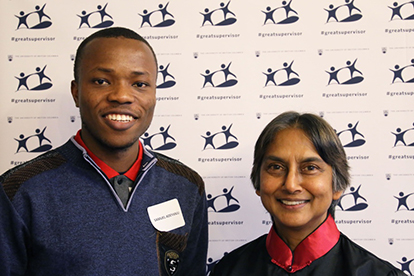
Samuel Adeyanju and Janette Bulkan
Lil'wat Lvmlaomen: Gendered Cultural Resurgence with Lil'wat Traditional Medicine Use
Principal Investigator: Janette Bulkan
Kwseltktnews, “We are all related,” A Secwepemc community-based approach to caring for families
Principal Investigator: Natalie Clark
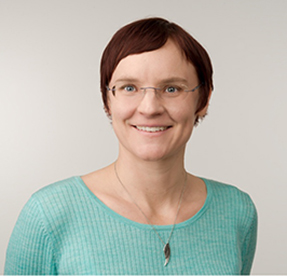
Slanay skwalwin: Developing foraging walks with Squamish Nation to promote Indigenous women's heart health
Principal Investigator: Annalijn Conklin
Creating Safe Paths for Indigenous Women, Girls and LGBTQ2SA+ Individuals in Edmonton and Area
Principal Investigator: Creating Hope Society of Alberta
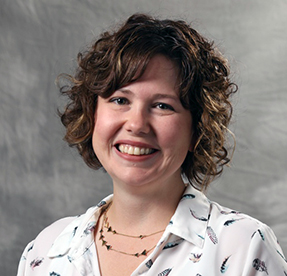
Two Spirit Community and Research Gathering
Principal Investigator: Melissa Dykhuizen
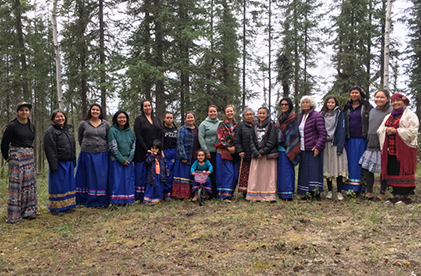
Dene Nahjo's Recognition of Being: Indigenous Women's Gathering
Principal Investigator: Danya Erasmus
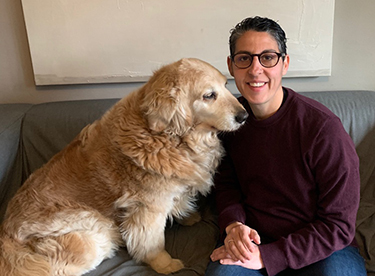
Building Two Spirit Supports at Egale Youth Services: Wellness, Access and Inclusion for Two Spirit Youth under 29 years of age
Principal Investigator: Lucy Gallo
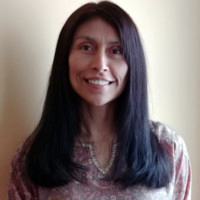
Study on the cultural appropriateness and safety of a mental health assessment tool among the Indigenous communities of Canada
Principal Investigator: Liliana Gomez Cardona
Indigenous “Communities within Communities”: Aging Well and HIV
Principal Investigator: Sean A Hillier
Métis Healing and Wellness: Connecting to Métis Culture through Beadwork
Principal Investigator: F. Ishiyama
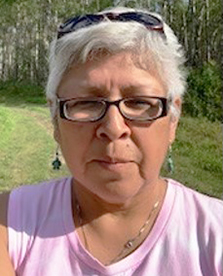
Mâmawapiwin (Meeting) -restoring Men's roles and responsibilities
Principal Investigator: Margaret L Kisikaw Piyesis
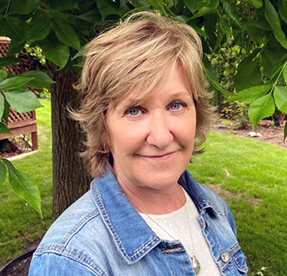
Learning from Our Elders: Indigenous Perspectives of Gender in Harvesting and Gathering
Principal Investigator: Donna L Kurtz
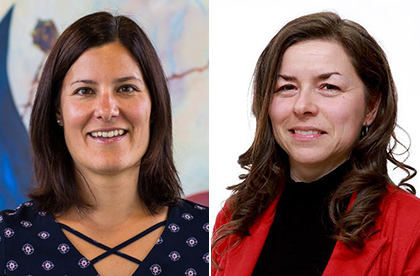
Anne-Marie Leclerc and Roxanne Lemieux
Development of Trauma-Informed Practices for Indigenous Women Transitioning to Parenthood
Principal Investigator: Anne-Marie Leclerc
Indigenous Youth Empowerment Handbook, Curriculum and Training Series: Mobilizing Youth to Address Gender-Based Violence and Interconnected Health Issues in Northern Indigenous Communities
Principal Investigator: Liard Aboriginal Women's Association
Early Partnerships in Building Community-Led Programs and Supports for Incarcerated Indigenous Mothers in Ontario
Principal Investigator: Angela Mashford-Pringle
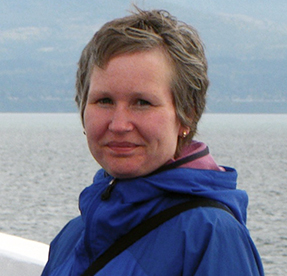
Land, Language, Life: Engendering an Indigenous Identity and Wellness
Principal Investigator: Laurie Meijer Drees
Two Worlds, Two Spirits: Gathering the Circle of LGBTQ2S+ Métis in British Columbia
Principal Investigator: Métis Nation of Greater Victoria
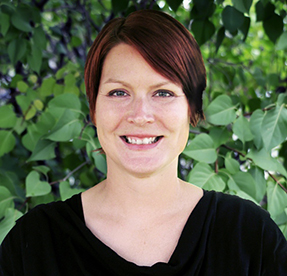
Indigenous Elders' Lodge: Treaty 7 Elders' exploration of the role of traditional Gender Roles on Wellness
Principal Investigator: Janet Naclia
Visioning Two-Spirit Wellness in Urban Indigenous Communities
Principal Investigator: Ontario Federation of Indigenous Friendship Centres (OFIFC)
Ceremonies of Life: Sexual and Gender Wellness through Togetherness
Principal Investigator: Paqtnkek Health Centre

The Nine Genders: A Traditionalist way of organizing Indigenous gender, Interpreting gender through an Indigenous worldview
Principal Investigator: Michael R Parsons
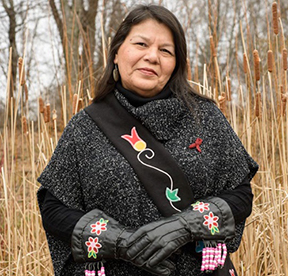
Iskwew Iskotew (Woman Fire): HIV Positive Indigenous Women's Wholistic Health Symposium, Bringing Solutions-Focused Research to Life through Knowledge Translation and Exchange
Principal Investigator: Doris Peltier

Harlan Pruden and Travis Salway
Wellness in Two-Spirit Communities across Turtle Island: A two-eyed seeing approach to a gender-inclusive community-based 2S research network
Principal Investigator: Harlan Pruden
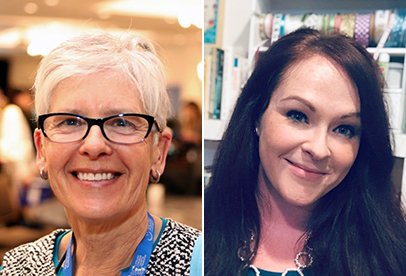
Susan J Ross and Melissa Tremblay
Developing a community-academic research network based in Maskwacis, Alberta to improve Indigenous gender-related health and wellness
Principal Investigator: Susan J Ross
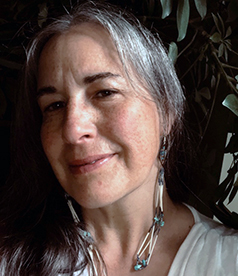
Exploring the needs of Calgary's urban Indigenous youth across the gender-identity spectrum in relation to culturally relevant programming and services to support sexual health, identity and belonging
Principal Investigator: Natalie St-Denis
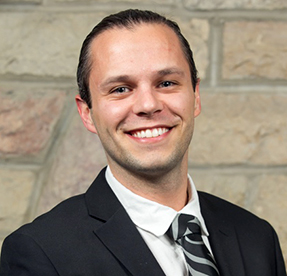
Two Spirit peoples' experiences accessing and receiving care in community pharmacies
Principal Investigator: Jaris P Swidrovich
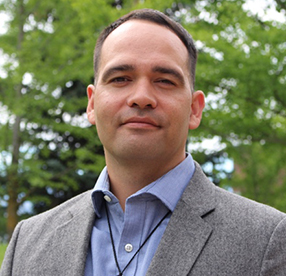
Indigenous Digital Wellness: Indigenous Masculinity, Identity, and Wellbeing in Male Youth
Principal Investigator: Braden P Te Hiwi
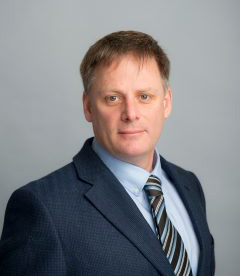
A Culturally Respectful Approach to Identifying the Roles Sex and Gender Play in the Health and Wellness of Nlaka'pamux First Nations Communities
Principal Investigator: Darren E Warburton
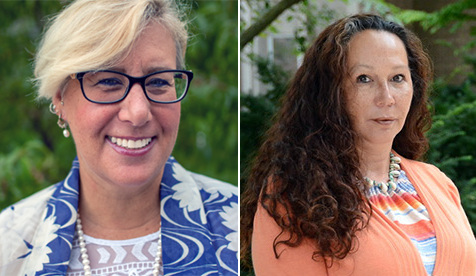
Christine M Wekerle and Dawn Martin-Hill
The Eniako'nikonhriiohake (One will have a good mind) Project: Building a technology-based resilience curriculum for Indigenous youth
Principal Investigator: Christine M Wekerle
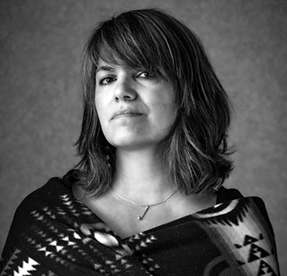
Strengthening Relations Through Cultural & Arts-Based Practices to Promote Resiliency and Well-Being for Two-Spirit Youth and Their Families
Principal Investigator: Lana Whiskeyjack
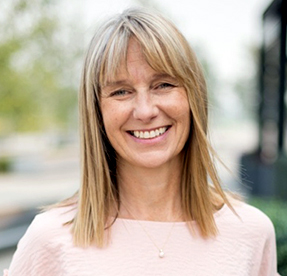
Advancing a holistic, physical activity-based wellness program for Indigenous women – Knowledge sharing to foster expansion
Principal Investigator: Sonja C Wicklum
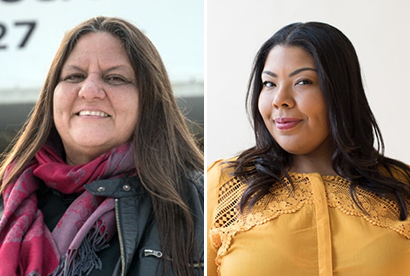
Alexandria Wilson and Tasha Spillett
Re(connecting) and Re(membering): Gathering Indigenous Women and Two-Spirit Land-Based Educators and Practitioners
Principal Investigator: Alexandria M Wilson
Proclaiming Our Roots: Sharing The Stories of Indigenous-Black People's Identities for Health and Wellbeing in Canada
Principal Investigator: Ciann L Wilson
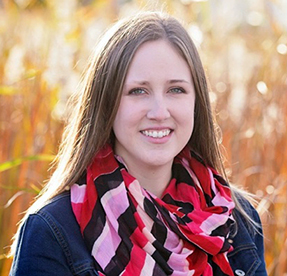
Optimizing the Health of Indigenous Infants and Toddlers: Identification of Community Strengths, Needs and Priorities to Promote Early Childhood Development through Healthy, Gender Diverse Parenting
Principal Investigator: Amy Wright
Indigenous Gender and Wellness Team Grants (Phase 3)
The IGW Team Grant funding opportunity is the third phase of a larger initiative on the topic of Indigenous Gender and Wellness.
This final phase will provide funding for Indigenous-led teams to implement their ideas through research and action-oriented, community-based participatory projects that will improve wellness for Indigenous Peoples from a gendered perspective. The Grants are not restricted to those who received a Development Grant in Phase 2 of this initiative.
This funding opportunity will focus on addressing themes related to Indigenous gender and wellness. In this context, gender and wellness should be broadly defined to encompass an Indigenous, holistic view of health. Projects can tie wellness to ceremony, language, culture, behaviours, land-based projects and more. Projects on topics important to Indigenous youth and young adults are especially encouraged.
Funds available
- The total amount available for this funding opportunity is $7,000,000, enough to fund approximately 14 Team Grants. This amount may increase if additional funding partners participate. The maximum amount per grant is $166,667 per year for up to 3 years, for a total of $500,000 per grant.
- The CIHR – HIV/AIDS and STBBI Research Initiative: Community-Based Research Program – Indigenous Stream will support up to $250,000 (of the $7,000,000 total) for applications relevant to the Research Initiative as indicated in the Sponsor Description section.
Objectives
This funding opportunity is expected to:
- Support Indigenous-led research related to gender and wellness;
- Encourage knowledge creation that will raise awareness and improve understanding of Indigenous concepts of gender in a strengths-based, wellness context;
- Facilitate knowledge sharing as to how Indigenous concepts of gender can affect wellness, in a manner that is directly relevant to and for the benefit of Indigenous communities; and
- Support the implementation of action-oriented, community-based projects that will improve wellness among Indigenous communities from a gendered perspective.
Awardees
Indigenous Gender and Wellness – Knowledge Sharing (Phase 4)
At a glance
- Indigenous Gender and Wellness – Phase 4: Knowledge Sharing Operating Grants
- 15 operating grants funded
- Total Investment: $2.9 million
The Indigenous Gender and Wellness (IGW) Knowledge Sharing grant is the fourth phase of the IGW Initiative, co-led by CIHR's Institute of Gender and Health and Institute of Indigenous Peoples' Health.
The first phase of the IGW supported travel grants to attend a 2019 Idea Fair and Learning Circle. The second phase (2020) assisted Idea Fair attendees to continue building relationships with community members and partners through a one-year development grant. The third phase provided three years of Team Grant funding (2021-2024) for Indigenous-led teams to implement their ideas through research and action-oriented, community-based participatory projects aiming to improve wellness by, with, and for Indigenous People from a gendered perspective.
By focusing on Knowledge Sharing, this fourth funding opportunity ensures that research learnings about First Nations, Inuit and Métis Gender and Wellness effectively reach those who need to hear them – including First Nations, Inuit and Métis individuals, communities and community partners, clinicians, decision-makers, the research community, research funders, trainees, and the general public, among others.
The funding opportunity encourages the use of culturally relevant and/or arts-based methods to acknowledge and uphold Indigenous approaches to Knowledge Sharing in Gender and Wellness, and support work that is meaningful and culturally safe for First Nations, Inuit and/or Métis communities. In this context, wellness is broadly defined to encompass an Indigenous, holistic view of health.
Funds Available
Grants up to $200,000 for one year have been awarded.
Objectives
The specific objective(s) of this funding opportunity are to:
- Support Knowledge Sharing activities from ongoing or recently completed, community-engaged research projects that aim to improve the wellness of Indigenous Peoples in Canada from a gendered perspective, including how Indigenous concepts of gender affect wellness
- Promote the use of culturally relevant Knowledge Sharing activities and approaches and/or arts-based methods, among other possible Knowledge Sharing approaches, to share learnings about Indigenous Gender and Wellness
- Encourage strengths- and distinctions-based Knowledge Sharing that will build lasting relationships and improve shared learning and understanding, application, and opportunity to increase wellness for Indigenous individuals and communities using a gendered lens
- Bridge capacity of the next generation of Indigenous health researchers and community partners in Knowledge Sharing focused on Indigenous Gender and Wellness
- Support the evaluation of Knowledge Sharing activities and approaches, to support ongoing learning with the goal to improve the wellness of Indigenous Peoples in Canada from a gendered perspective, including how Indigenous concepts of gender affect wellness
Awardees
CIHR has invested $2.9 million through the Indigenous Gender and Wellness – Phase 4: Knowledge Sharing operating grant to support 15 Indigenous-led teams from across the country to deliver on the vision of sharing health research knowledge and learnings about First Nations, Inuit and Métis gender and wellness with Indigenous individuals and communities, clinicians, decision-makers, the research community, research funders, trainees, the public, and beyond.
FAQ for Indigenous Gender and Wellness - Knowledge Sharing (Phase 4)
-
1. What types of topics are eligible for this funding opportunity?
This funding opportunity focuses on Knowledge Sharing about the learnings from Indigenous Gender and Wellness research using strengths- and distinctions-based, community-engaged approaches.
Possible topics or project themes might include, but are not limited to:
- Gender and wellness across the lifespan, including in children, youth, adults and Elders.
- Two-Spirit and/or Indigenous LGBTQI+ wellness.
- Gender, family relations and/or parenting (e.g. fatherhood, motherhood, parenthood).
- Gender and Land, body and spirit connections.
- Gender and physical, mental, emotional, spiritual and/or cultural health and wellness.
For a more detailed list, please see the "Purpose" section of the full funding opportunity.
-
2. What types of Knowledge Sharing products are eligible for this funding?
Knowledge Sharing can include learnings shared through culturally-relevant practices and activities, arts-based methods, and more traditional formats such as publications, toolkits and workshops, among other methods.
If you have questions about whether your Knowledge Sharing activities or products are eligible, reach out to the CIHR Contact Centre: support-soutien@cihr-irsc.gc.ca
-
3. Who is eligible to apply for this funding opportunity?
The person or organization leading the proposed project is the Nominated Principal Applicant (NPA).
To be eligible, an NPA must be:
- an Indigenous non-governmental organization in Canada with a research and/or knowledge translation mandate;
OR - an individual affiliated with an Indigenous non-governmental organization in Canada with a research and/or knowledge translation mandate;
OR - an individual (an independent researcher or a knowledge user) affiliated with a Canadian postsecondary institution and/or its affiliated institutions (including hospitals, research institutes and other non-profit organizations with a mandate for health research and/or knowledge translation);
OR - an individual (an independent researcher or a knowledge user) working in a municipal, provincial or territorial government in Canada where the activity which forms the subject matter of the funding is not being funded by specific programs of those municipal, provincial and territorial governments.
If the NPA is an individual, they must either self-identify as Indigenous (First Nations, Inuit and/or Métis) and/or provide evidence of having meaningful and culturally safe involvement with Indigenous Peoples.
Learn more in the How to Apply section of the funding opportunity.
In addition to the NPA requirements, there is a longer list of eligibility requirements that teams must meet. These are listed in detail in the Eligibility section of the funding opportunity.
- an Indigenous non-governmental organization in Canada with a research and/or knowledge translation mandate;
-
4. Is a non-Indigenous non-governmental organization eligible to apply as the Nominated Principal Applicant?
Non-Indigenous organizations are not eligible to apply as the Nominated Principal Applicant for this funding opportunity.
However, an individual affiliated with a non-Indigenous, non-governmental organization in Canada could be part of the research team in another role, as appropriate (e.g. Co-Applicant, Collaborator, Knowledge User, Trainee).
Please reach out to the CIHR Contact Centre if you have any questions: support-soutien@cihr-irsc.gc.ca
-
5. What types of participants are required on the research team? Can one person fulfill multiple roles?
The team must include each of four (4) participant types listed below, in any role, as appropriate, including Collaborator:
- an Indigenous Elder and/or Indigenous Knowledge Holder/Keeper/Guardian
- a Trainee
- must either self-identify as Indigenous (First Nations, Inuit and/or Métis) and/ or provide evidence of having meaningful and culturally safe involvement with Indigenous Peoples (see How to Apply).
- a knowledge user (who can be, but is not limited to, a practitioner, policy maker, educator, decision maker, health care administrator, Indigenous community leader, or an individual in a health charity, patient group, private sector organization or a media outlet)
- a person with lived or living experience (PWLLE) relevant to proposed activities and in alignment with the overarching research area of Indigenous Gender and Wellness Knowledge Sharing (e.g. Two Spirit person, Indigenous father, Elder)
- For applications to the Gender and Wellness among First Nations, Inuit and/or Métis youth funding pool, the PWLLE must be a youth
The same individual can fulfill multiple participant type roles. For example, a trainee could also be a person with lived or living experience.
Please note: In addition to these roles, applications must meet all of the requirements listed in the Eligibility section of the funding opportunity.
-
6. Why is eligibility not restricted only to Indigenous applicants?
This funding opportunity builds on the foundation of earlier phases of the Indigenous Gender and Wellness (IGW) Initiative, all of which have been open to researchers who either self-identify as Indigenous (First Nations, Inuit, Métis) or provide evidence of having meaningful and culturally safe involvement with Indigenous Peoples.
With this funding opportunity, we want to ensure that existing research teams that were a part of previous phases of the IGW initiative remain eligible for this next phase of funding, provided that they continue to meet the eligibility criteria.
-
7. What is CIHR doing to reduce the chance of Indigenous Identity fraud?
CIHR is committed to removing barriers to Indigenous-led research (Priority 3C in CIHR's Strategic Plan 2021-2031), and recognizes the importance of protecting the integrity of Indigenous-led research and addressing concerns related to Indigenous identity misrepresentation.
In fall 2024, CIHR, along with the National Science and Engineering Council (NSERC) and Social Sciences and Humanities Research Council of Canada (SHHRC) released the Tri-Agency Policy on Indigenous Citizenship and Membership Affirmation to ensure that opportunities intended for Indigenous applicants are awarded to Indigenous people.
Work is currently ongoing to pilot test and implement this policy, which will apply to future funding opportunities that are designed to fund Indigenous applicants.
-
8. What does it mean to, "provide evidence of having meaningful and culturally safe involvement with Indigenous Peoples?"
CIHR uses this definition for meaningful and culturally safe involvement with Indigenous Peoples, as shared on the CIHR Institute of Indigenous Peoples' Health's (IIPH) website.
-
9. Are applications restricted to those who have previously participated in IGW activities or grants?
No, applicants are not required to have participated in previous phases of the Indigenous Gender and Wellness initiative to apply for this funding opportunity.
All eligible applicants are encouraged to apply.
-
10. Funding is only offered for existing/ongoing research projects. Why is that?
This funding opportunity focuses on sharing learnings from existing research projects related to Indigenous Gender and Wellness.
The one-year timeline of this funding opportunity is too short to develop and execute new research in addition to conducting knowledge sharing activities and evaluating these knowledge sharing activities.
-
11. What key dates should I be aware of? What is required at the time of registration? At the time of application?
The registration deadline is September 3, 2025.
Applicants must register to be able to submit an application. Once the registration has been submitted, the application portal will open and allow applicants to start completing their full application.
Please note: To ensure that you don't have any issues with registration, we recommend beginning the registration process well in advance of the registration deadline. Registering does not mean that you are required to apply, so it is best to do so if you think you might want to put an application forward.
Much of the information completed at the time of registration will automatically be transferred to your application and can be updated as needed.
For a full list of what is needed at the time of registration, please see the Step 1 - Registration under the How to Apply section of the funding opportunity.
The application deadline is October 1, 2025.
For a full list of what is needed at the time of application, please see the Step 2 - Application under the How to Apply section of the funding opportunity.
-
12. Why is the application period so short?
We recognize that a longer application period is preferable, especially for grants focused on Indigenous, community-based research. In this case, a relatively short application period was needed to ensure funds could come out of the 2025-2026 fiscal year.
-
13. What types of CVs are required, and for whom? When are these due?
All participants, excluding Collaborators, are required to submit a Tri-Agency CV (TCV).
However, Indigenous Elders and/or Indigenous Knowledge Holders who are listed as Collaborators, but who are expected to make a significant contribution must also include a Tri-Agency CV.
Please note, CIHR is currently making a transition from the Common CV (CCV) to the TCV. While there may still be some references to the Common CV in CIHR's system, the new TCV must be used in its place. All participants must follow the TCV instructions as specified in the Funding Opportunity and complete and attach the TCV.
All CVs must be submitted for the application deadline on October 1, 2025. The full application including CVs takes quite some time to upload, and there can be some lag around large deadlines. We recommend uploading CVs well before the deadline date.
-
14. Who needs a PIN? And who needs to provide a Tri-Agency CV (TCV)?
All listed participants, with the exception of Collaborators, are required to have or obtain a CIHR PIN and submit a Tri-Agency CV.
If Indigenous Elders and/or Indigenous Knowledge-Keepers do not wish to obtain a PIN, they may be named as Collaborators so a PIN is not required.
However, despite being named as a Collaborator, Indigenous Elders and/or Knowledge Holders who are expected to make a significant contribution to the application, must include a "Tri-Agency CV". Please note that names of Collaborators do not appear in CIHR funding decision databases and documents.
Organizations applying as Nominated Principal Applicants for the first time must contact CIHR's Contact Centre (support-soutien@cihr-irsc.gc.ca) for guidance in creating a ResearchNet account and registering for a CIHR PIN.
For more detailed information, please see the How to Apply section of the funding opportunity.
-
15. Why is the funding start date before the Notice of Decision?
For this funding opportunity, applicants will learn about funding decisions around February 19, 2026, but the funding start date is December 1, 2025. This model provides flexibility to cover potential project-related expenses dating back to as early as December 1, 2025.
-
16. How long do applicants have to use the funds?
All applications must propose work that is planned to take place over a one-year period from December 1, 2025 to November 30, 2026.
However, applicants have until March 31, 2028 to use the funding. All CIHR grants come with an automatic one fiscal year no-cost extension to the authority to use funds (ATUF) period beyond the expiry date of the grant (i.e., up to March 31 of the next full fiscal year).
All funds will be paid out in fiscal year 25/26, by March 31, 2026.
-
17. Can funds be used for cultural protocol, to compensate Elders, towards ceremony etc.?
Yes. Funds can be used for cultural protocol, honoraria for Elders, ceremony and other expenses, including costs related to community mobilization and engagement, including culturally relevant promotional items such as tobacco, cloth, feasting, and gift giving for honoring ceremonies, and cash reimbursements (in a method acceptable to the individual or community being reimbursed) to compensate community participation.
See Allowable Costs section of the funding opportunity for a more detailed list.
-
18. Which organizations are eligible to hold CIHR funding? How can an organization apply to become eligible to hold CIHR funding?
A list of institutions that are currently eligible able to hold CIHR funding are listed at: CIHR's webpage on CIHR Eligible Institutions Authorized to Administer Grant and Award Funds.
- If your NPA (individual) is not affiliated with a CIHR Eligible Institution Authorized to Administer Grant and Award Funds, or if your NPA (organization) isn't already a CIHR Eligible Institution Authorized to Administer Grant and Award Funds, there are a few options:
- An institution can apply to become a CIHR Eligible Institution Authorized to Administer Grant and Award Funds. Instructions are available online.
- Institutions that cannot meet the requirements to become a CIHR Eligible Institution Authorized to Administer Grant and Award Funds may still be permitted to administer the funds under special terms and conditions, as determined by CIHR, following an eligibility review. Instructions for this process are available here.
- In some circumstances, it may also be possible for an organization or individual to receive a direct payment.
This process does not have to be completed before you submit your application, but it does have to be completed to receive funds. This process can be intensive and does take some time, so it is best to get started as soon as possible.
Questions related to institutional eligibility, including those about the documents to submit for assessment to become an Eligible Institution, must be sent to the CIHR Contact Centre: support-soutien@cihr-irsc.gc.ca.
- If your NPA (individual) is not affiliated with a CIHR Eligible Institution Authorized to Administer Grant and Award Funds, or if your NPA (organization) isn't already a CIHR Eligible Institution Authorized to Administer Grant and Award Funds, there are a few options:
-
19. There is a requirement for an evaluation plan for the proposed knowledge sharing activities. What should this include?
A one-page evaluation plan is required as part of the application. This plan should describe how the applicants will evaluate the process, impact and learnings of Knowledge Sharing activities to improve the wellness of Indigenous Peoples in Canada from a gendered perspective, including how Indigenous concepts of gender affect wellness.
The purpose of the evaluation is to ensure that the learnings from the knowledge sharing activities can be shared and built upon by others in the future.
-
20. Where can I get help preparing my application?
CIHR cannot help you prepare your application. However, if you have specific questions about the funding opportunity or the instructions to apply, please reach out to the CIHR Contact Centre: support-soutien@cihr-irsc.gc.ca
Additional support may be available from:
- The Network Environments for Indigenous Health Research (NEIHRs) are a national network of Centres focused on strengthening Indigenous research capacity, training and mentoring, and supporting Indigenous community-based health research that reflects the priorities and values of Indigenous Peoples. There are nine NEIHRs across Canada (BC, Alberta, Saskatchewan, Manitoba, Ontario, Quebec, the Atlantic provinces, NWT and Nunavut), with a tenth in development in the Yukon. The NEIHR in your territory may have supports and resources available as you prepare your application.
- Learn more about the regional NEIHRS Centres.
- Learn more about the NEIHR National Coordinating Centre.
- Many universities offer grant facilitation support for their faculty. If you, or someone on your team, has a university affiliation, reach out to their faculty to see what support resources are available.
- Private consultants can be hired to support grant preparation activities.
- The Network Environments for Indigenous Health Research (NEIHRs) are a national network of Centres focused on strengthening Indigenous research capacity, training and mentoring, and supporting Indigenous community-based health research that reflects the priorities and values of Indigenous Peoples. There are nine NEIHRs across Canada (BC, Alberta, Saskatchewan, Manitoba, Ontario, Quebec, the Atlantic provinces, NWT and Nunavut), with a tenth in development in the Yukon. The NEIHR in your territory may have supports and resources available as you prepare your application.
-
21. I was unable to attend the information webinar for this funding opportunity. Where can I find the presentation slides from the webinar?
For the information webinar slides, please reach out to the CIHR Contact Centre: support-soutien@cihr-irsc.gc.ca
-
22. Where can I find out more information?
For the information webinar slides, please reach out to the CIHR Contact Centre: support-soutien@cihr-irsc.gc.ca
- Date modified: