III Institute Advisory Board Members – Biographies

Srinivas Murthy (Chair)
Pediatric Critical Care and Infectious Diseases Physician
Clinical Associate Professor, University of British Columbia and BC Children's Hospital Research Institute
Srinivas Murthy is a dually-trained Pediatric Critical Care and Infectious Diseases physician at the University of British Columbia and BC Children's Hospital. His clinical expertise is in managing severely ill, infected patients, with both routine and emerging infections, both domestically and around the world. His research expertise is in innovative clinical trials, global health, and guideline methodology.

Shelly Bolotin
Director, Centre for Vaccine Preventable Diseases
Associate Professor, Dalla Lana School of Public Health and the Department of Laboratory Medicine and Pathology, University of Toronto
Scientist, Public Health Ontario
Dr. Shelly Bolotin is the Director of the Centre for Vaccine Preventable Diseases, and an Associate Professor at the Dalla Lana School of Public Health and the Department of Laboratory Medicine and Pathobiology, at the University of Toronto. She is also a scientist at Public Health Ontario.
Dr. Bolotin received a BSc in Microbiology and Immunology from McGill University, an MSc in virology and PhD in microbiology at the University of Toronto, and an MSc in Public Health at the London School of Hygiene and Tropical Medicine. In addition to working in Academia, Dr. Bolotin has worked in public health at the provincial and national levels, focusing on surveillance and public health emergency response.
Dr. Bolotin’s research program utilizes a multi-disciplinary approach to evaluate whether our population is adequately protected from vaccine-preventable diseases. Applying a public health lens, her studies combine epidemiological and microbiological methods to answer questions related to population immunity and vaccine effectiveness, and determine our future risk for outbreaks or epidemics.

Lori L. Burrows
Associate Director, Michael G. DeGroote Institute for Infectious Disease Research
Professor, Biochemistry and Biomedical Sciences, McMaster University
Professor Lori Burrows is a microbiologist and international expert on the structure, function, and regulation of type IV pili (T4P), ubiquitous bacterial virulence factors used for adherence, DNA uptake, biofilm formation, and twitching motility. Her fundamental studies have played a significant part in revealing the mechanism of T4P function, which is necessary for the design of anti-virulence therapies. Her team also studies biofilm formation, focusing on the stimulation of biofilm development by sub-inhibitory antibiotic concentrations and exploitation of that stimulation phenotype to uncover new antimicrobials for multidrug-resistant gram-negative bacteria. A third area of interest is the characterization of bacteriophages as sources of novel lectins and as potential treaments for antibiotic-resistant bacteria. Burrows’ research is funded by the Canadian Institutes of Health Research (CIHR), the Natural Sciences and Engineering Research Council of Canada, the Canadian Glycomics Network, the Ontario Research Fund, and industrial support. She has published over 120 peer reviewed papers, reviews, and book chapters. She is the Associate Director (Partnerships and Outreach) of McMaster University’s Michael G. DeGroote Institute for Infectious Diseases Research, a Fellow of the American Academy of Microbiology, and serves on the Editorial Boards of the Journal of Bacteriology (ASM), the Journal of Biochemistry (ASBMB), and ACS Infectious Diseases. She received the 2020 CSM Murray Award for Career Achievement from the Canadian Society for Microbiologists to recognize her contributions to the field.

Dominique Charron, DMV, PhD
One Health Institute, University of Guelph
Dr. Dominique Charron is a Visiting Scholar in One Health at the University of Guelph, and a member of the Public Health Agency of Canada Expert Panel on Avian Influenza and the One Health High Level Expert Panel advising the Quadripartite international agencies. She holds a Doctor of Veterinary Medicine and PhD in Epidemiology from the University of Guelph. Her expertise in integrated approaches to health combines knowledge of zoonoses, infectious disease emergence and ecology, antimicrobial resistance, food systems, climate change and sustainable development. Previously, she was Vice-President Programs and Partnerships at Canada’s International Development Research Centre where she led research programs and championed Canadian and international partnerships for gender responsive and inclusive science to address sustainable development challenges including in Global Health and response to public health emergencies. She is on the boards of the McEachran Institute and START.org. She is the President of DFGC Health and Environment Ltd, through which she offers consulting in One Health leadership and research. She has published opinion and research relevant to One Health, over 40 peer-reviewed publications, and a book, Ecohealth Research in Practice. She lives in Ottawa, on unceded Algonquin territory.

Nathalie Grandvaux, PhD
Professor, Université de Montréal
Senior Researcher, CRCHUM
Deputy Scientific Director, Student and Postdoctoral Affairs, CRCHUM
Dr. Nathalie Grandvaux is a Professor of Biochemistry and Molecular Medicine at the Université de Montréal and a senior researcher at the Research Center of the Université de Montréal Hospital Center (CRCHUM) since 2005. Since 2020, she has served as the Deputy Scientific Director for Student and Postdoctoral Affairs at CRCHUM, supporting the next generation of scientists.
Dr. Grandvaux leads a cutting-edge research program focused on combating respiratory viruses. Her primary research investigates the molecular mechanisms driving interferon-mediated antiviral responses, with a special focus on the role of redox metabolism. This work aims to identify new therapeutic targets for the development of host-targeted broad-spectrum antivirals that can act independently or in synergy with direct antivirals. Her research also extends to developing transformative treatments for autoimmune and inflammatory diseases, including rare disorders such as interferonopathies.
In addition to her lab-based research, Dr. Grandvaux and her team actively collaborate on projects characterizing the infectivity of respiratory viruses in bioaerosols, addressing critical public health challenges.
A sought-after voice in the scientific community, Dr. Grandvaux frequently engages with the media, advocating for evidence-based science and promoting public understanding of key biomedical topics.

Suzanne Hindmarch
Associate Professor, Department of Political Science
Associate Dean (Research & Graduate), Faculty of Arts
University of New Brunswick
Dr. Suzanne Hindmarch is a political scientist with research expertise in the politics of infectious disease response. Her CIHR- and SSHRC- funded research program investigates the origins, impacts and efficacy of the diverse policy and political strategies through which infectious disease is addressed at global, national and sub-national levels. In particular, Dr. Hindmarch examines the conditions under which the health of equity-deserving groups including Indigenous, racialized, LGBTQIA+ and global South populations is (or is not) advanced in infectious disease response, especially in the context of global health security. She also studies the interface of global and domestic infectious disease governance, asking why global infectious disease response strategies are adopted, adapted or resisted domestically, and how states advance domestic priorities via global health governance mechanisms.
Dr. Hindmarch holds a PhD in political science (Toronto), an MA in international development studies (Dalhousie) and a BA in political science (Alberta). Prior to her academic career she worked in community-based AIDS organizations and in the Public Health Agency of Canada. She is the author of Securing Health: HIV and the limits of securitization, co-editor of Seeing Red: HIV/AIDS and Public Policy in Canada, and has published widely on the global and domestic politics of AMR and of HIV/AIDS.
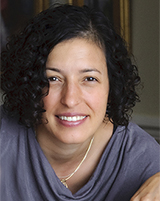
Mona Loutfy, MD
Professor, Infectious Diseases Specialist & Clinical Researcher
Women's College Research Institute, Women's College Hospital
Dr. Mona Loutfy is an Infectious Diseases Specialist, Senior Clinician Scientist, and Professor at Women’s College Hospital and the University of Toronto. Her main clinical practice is in inner city Toronto where she specializes in the care of cis and trans women, gender diverse people, youth and couples with HIV and people with socially complicated lives. She also specializes in reproductive health and HIV. In 2006, Dr. Loutfy founded the Women and HIV Research Program at the Women’s College Research Institute, which uses community-based research and works in partnership with women living with HIV to carry out critical research to optimize the lives and care of women with HIV and their families. With many partners, Dr. Loutfy has been leading the Canadian HIV Women’s Sexual and Reproductive Health Cohort Study, the largest community-based HIV study in Canada for over a decade. In 2017, Dr. Loutfy was awarded a CIHR Foundation Grant and in 2023, she was awarded a CIHR-WAGE Women’s Health Research Hub Grant for her work on the Women-Centred HIV Care model. In partnership with community leaders and by using anti-oppression, anti-racism, social justice and feminist frameworks, Dr. Loutfy and her team have made a significant difference in advocating for access to and delivery of high-quality care for women living with HIV.

Renée Masching
Vanier Scholar, Dalhousie University
Renée Masching is a nationally respected Indigenous health leader with over 25 years of experience advancing community-based research and policy. A member of Six Nations of the Grand River and of Irish descent, she was adopted and raised in a mixed European heritage family. Renée holds a BA in Psychology and BSW/MSW from McMaster University, is the founder of Seven Directions Consulting and is currently a Vanier Scholar in the PhD-Health at Dalhousie University. Throughout her career, she has led community-based organizations, shaped policy, and advanced Indigenous health research, particularly in HIV/AIDS, hep C, and STBBI. Renée’s contributions have been recognized with the King Charles III Coronation Medal in 2025 and an Honorary Doctor of Laws from the University of Victoria in 2022, for distinguished achievements in scholarship, research, teaching, and public service. She lives by the ocean in Mi’kma’ki (Lawrencetown, NS) with her spouse, children and pets.
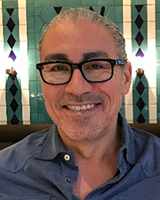
Harlan Pruden
Founder, Two-Spirit Dry Lab, Turtle Island
Harlan Pruden is a proud member of Nehiyô Nation or First Nations Cree in English. Harlan’s mother was a registered member the Beaver Lake Reservation and father was a registered member of the Whitefish Lake Reservation. These are two different reservations that are both signatories to Treaty 6. Harlan will provide an electronic copy of Harlan's certificate of Indian status card. Sharing and providing band registry information is highly unusual; however, this information is offered in a spirit of full discourse, transparency and accountability given the news of high-profile individuals claiming to be Indigenous. Nêhiyawêwin, the Cree language, is gender neutral and thereby gender inclusive; therefore, Harlan's pronouns are anything said mindfully and respectfully.
Harlan works with and for the Two-Spirit community locally, nationally, and internationally. Harlan founded the Two-Spirit Dry Lab, Turtle Island’s first research group that focuses exclusively on Two-Spirit people, communities, and experiences and the Managing Editor of Two-Spirit Journal, the first of its kind multi-platform Two-Spirit media news outlet.
Before relocating to Vancouver in 2015, Harlan was the Director of the NYC based organization NorthEast Two-Spirit Society. From 2014 to 2018, Harlan was a President Obama appointee to the US Presidential Advisory Council on HIV/AIDS (PACHA) and provided advice, information, and recommendations to the Secretary of the Dept. of Health & Human Services and the White House.
In 2025, Harlan moved to the traditional territories and homelands of the (Eastern) Cherokee, Yuchi and Miccoskee peoples of the Sautee Nacoochee valley.

Sheela Ramanathan
Professor, Department of Immunology and Cell Biology, Faculty of Medicine and Health Sciences, Université de Sherbrooke
Dr. Sheela Ramanathan obtained PhD in immunology from Madurai Kamaraj University in India for the work on immune response towards Mycobacterium leprae antigens in leprosy patients across the disease spectrum. Dr. Ramanathan completed post-doctoral training in pre-clinical disease models of autoimmune uveitis (with Dr. Philippe Druet in Paris) and autoimmune type-1 diabetes (with Dr. Philippe Poussier in Toronto). As an independent researcher at Université de Sherbrooke since 2007, Dr. Ramanathan investigated how GIMAP5 protein controls the activation of T lymphocytes and how Interleukin-15 promotes autoimmune diabetes, obesity, fatty liver disease and liver fibrosis. Currently, Dr. Ramanathan’s research is focussed on understanding the pathogenesis of long COVID and immune response to COVID-19 vaccines in rheumatoid arthritis patients and the elderly population, in close collaboration with other researchers and clinicians at Université de Sherbrooke. Dr. Ramanathan’s research is funded by Canadian Institutes of Health Research (CIHR) and the Natural Sciences and Engineering Research Council of Canada (NSERC).
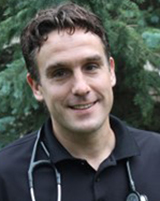
Stuart Skinner, MD
Assistant Professor, University of Saskatchewan
Section Lead, Division of Infectious Diseases
Executive Director, Wellness Wheel Medical Clinic
Dr. Stuart Skinner received his Medical Degree in 2002 from the University of Saskatchewan. He also received his Diploma in Tropical Medicine and Hygiene from the University of Alabama-Birmingham in 2005 and Infectious Diseases fellowship from the University of Manitoba in 2007. Currently, he works as an Infectious Disease specialist in Regina, Saskatchewan, with a focus on HIV and Hepatitis C for vulnerable populations and Indigenous communities and is the Section Lead for the Division of Infectious Diseases. Dr. Skinner founded and is the Executive Director for the Wellness Wheel Medical Clinic, which provides a holistic approach to communicable and chronic diseases combining Western and Indigenous approaches in care that are driven and led by people with lived experience and Indigenous communities. Dr. Skinner is also a CIHR-funded researcher and Assistant Professor at the University of Saskatchewan.
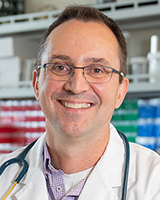
Stuart Turvey, MBBS, DPhil, FRCPC
Professor, Pediatrics, University of British Columbia
Clinician-scientist, BC Children’s Hospital
Pediatric Immunologist, BC Children’s Hospital
Dr. Stuart Turvey is a Professor of Pediatrics at The University of British Columbia where he holds both the Canada Research Chair in Pediatric Precision Health and the Aubrey J. Tingle Professorship in Pediatric Immunology. He is a clinician-scientist and Pediatric Immunologist based at BC Children’s Hospital.
Dr. Turvey’s research program is focused on determining the early-life origins of asthma and allergic disease, as well as harnessing the power of genomics to diagnose, treat and prevent pediatric immune disorders. His ability to transition from the clinic to the lab allows Dr. Turvey to take a precision health approach that is sensitive to the developmental course of the child. His work determines and responds to the underlying cellular, molecular and genetic abnormalities responsible for disease.
Dr. Turvey and his team generate new knowledge to define the mechanisms of disease pathogenesis and, ultimately, to identify new strategies to treat and even prevent these burdensome and often life-threatening conditions.

Jude E. Uzonna
Professor, Departments of Immunology and Medical Microbiology
Associate Dean (Research), Max Rady College of Medicine
University of Manitoba
Dr. Uzonna obtained his Doctor of Veterinary Medicine (DVM) degree with distinction from the University of Nigeria and a Ph.D. degree from the Western College of Veterinary Medicine, University of Saskatchewan. He did his postdoctoral fellowship training at the University of Pennsylvania, Philadelphia. He is a Professor in the Departments of Immunology and Medical Microbiology and currently the Associate Dean (Research) at the Max Rady College of Medicine, Rady Faculty of Health Sciences, the University of Manitoba. He was a Canadian Institutes for Health Research (CIHR) New Investigator and Research Manitoba Chair Professor in Infection and Immunity.
Dr. Uzonna’s research program (which is currently funded by CIHR and Natural Sciences and Engineering Research Council [NSERC]) focuses on understanding the cellular and molecular mechanisms that regulate immunity to infectious diseases, particularly those caused by protozoan parasites. He is particularly interested in unravelling host and parasite factors that regulate induction, maintenance and loss of protective immunity, with a view to exploiting the information gained from these studies for the development of effective vaccines and vaccination strategies against diseases caused by protozoan parasites. In addition, he is interested in understanding the immunomodulatory mechanisms that regulate the pathophysiology of sepsis and septic shock.
Dr. Uzonna has received numerous professional, academic, teaching, research and community awards, including the Canadian Society for Immunology (CSI) Investigator Award, CIHR New Investigator Award, Ken Hughes Award for Outstanding Achievement in Biomedical Research, Faculty of Graduate Studies Outstanding Mentorship Award and The Manitoba Black Community Award for Outstanding Achievement in Mentorship and Education. He is (or has served as) a member of editorial board or guest editor for many journals including, The Journal of Immunology, Infection and Immunity, Frontiers in Immunology, Immunology and Cell Biology, PLoS Pathogens, etc. He has extensive grant review experience and is currently a member of the CIHR Microbiology and Infectious Diseases Panel. He has mentored many trainees who are currently working in various fields including research, academia, and biotechnology.

Sarah Viehbeck
Chief Science Officer
Public Health Agency of Canada
Dr. Viehbeck is the Chief Science Officer and Vice-President, Science and Policy Integration Branch for the Public Health Agency of Canada. In this role, Dr. Viehbeck is responsible for providing strategic leadership to oversee and support science excellence, science-policy integration and science promotion, as well as re-energizing the scientific vision and capacity across the Agency, as well as strengthening the Agency’s surveillance and data systems, including those that guide public health risk assessment activities. Prior to this role, Sarah worked for 12 years at the Canadian Institutes of Health Research, most recently as an Associate Vice-President. She holds a Ph.D. in health studies from the University of Waterloo focusing on science and policy integration in public health.
- Date modified: