Discoveries for life

The faces of health research 2026
| Title |
|---|
Can a good social environment offset bad daily rhythms?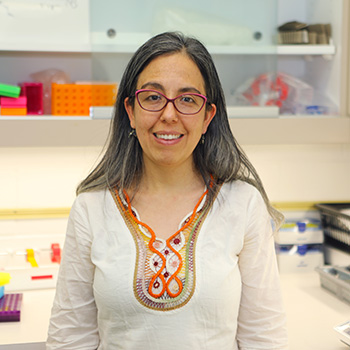
Drs. Paula Duarte Guterman and Nathan Insel Our daily routines and social environments can have a major impact on health. Disrupted sleep-wake patterns and social isolation can increase stress and affect sleep, mood, and inflammation, but these effects can differ between males and females. We still do not fully understand why. Working with degus we are examining how changes in light cycles and social conditions affect behaviour, sleep, stress, hormones, inflammation, and brain function. Degus are small, highly social rodents that, like humans, are active during the day and vulnerable to health problems like diabetes and Alzheimer’s disease. By studying many bodily changes together, rather than one at a time, our work will help reveal mechanisms by which a person’s sex and environment interact to influence health. The research could help explain why some people are more vulnerable to lifestyle stress and support more personalized approaches to health. Further reading |
Teaching AI to build better mRNA medicines
Dr. Bowen Li With support from CIHR, we developed LUMI-lab, an AI-powered, self-driving laboratory that discovers new materials for delivering mRNA medicines. mRNA can instruct cells to produce therapeutic proteins, but it is fragile and often cannot reach the right tissues safely. LUMI-lab combines AI, robotic chemistry, and biological testing to design ionizable lipids, special fat-like molecules that form nanoparticles to protect mRNA and carry it into cells. Each experiment teaches the AI which molecular features work best, helping it to identify promising materials faster than conventional trial-and-error. Our goal is to create delivery systems that carry RNA medicines beyond the liver to tissues where new treatments are urgently needed. By accelerating materials discovery and testing, this research could help bring safer, more precise therapies to Canadians facing genetic diseases, cancer, and other conditions that remain difficult to treat. Further reading
Social media |
Faster, stronger blood clots could save lives and change care
Dr. Jianyu Li My colleagues and I developed a new way to help the body stop severe bleeding fast. We engineered blood clots that develop quickly and that are stronger than conventional clots. Our bodies naturally form clots when blood vessels are damaged, but the body's ability to do so quickly can sometimes get overwhelmed, especially after a major trauma or surgery. Natural and other engineered blood clots may also break apart, putting patients at risk. We developed a method called 'click clotting' that through a chemical reaction links proteins on the surface of red blood cells to form a tough, stable gel. This technique uses a person's blood or donated blood and can create a clot in minutes. Once applied, it can stop bleeding in seconds. It also works alongside the body's own clotting process to support healing as this type of clot is less likely to break down. Our research results are promising. Although more research is needed, these engineered clots have the potential to save lives, both in emergencies and for those with clotting disorders. Further reading
Social media |
Combining medications to better treat chronic pain
Dr. Ian Gilron One in five Canadians live with chronic pain, which can be difficult to treat. Chronic pain is commonly managed with medications, in conjunction with other therapies. Studies of chronic pain treatment typically compare one medication to a placebo. These studies, as well as the experiences of those living with chronic pain, indicate that current medications can have limited effectiveness in managing chronic pain. Our research focuses on combination approaches to pain treatment, where medications that work in different ways are taken together to better manage conditions including fibromyalgia and nerve, pelvic, and cancer-related pain. For example, we have shown that combining gabapentin with morphine, or nortriptyline with gabapentin, is more effective than using either medication alone to treat pain due to nerve problems. This research program continues to drive work to identify better medication combinations and to assess the safety and effectiveness of combinations that are already widely used. Further reading |
A grassroots network connects mental health researchers across Canada
Assistant Professor, Educational Psychology, University of Regina 
Postdoctoral Fellow, McMaster University & The Research Institute of St. Joe's Hamilton 
Director, Health System Impact Training Platform 
Assistant Professor, School of Epidemiology and Public Health, University of Ottawa NExT—the Network for Early Career X Trainee Researchers in Youth Mental Health—emerged from a simple but powerful realization: early career researchers across Canada needed meaningful ways to stay connected. For Health System Impact (HSI) Program alumnae Drs. Christine Mulligan, Miranda Field, Nicole D'souza, and Raegan Mazurka, meeting up at a national retreat in 2023 sparked a shared commitment to collaboration over competition. What began as informal weekly conversations among HSI fellows soon evolved into a supportive community grounded in shared purpose. Recognizing the value of these relationships, Dr. Mulligan and Dr. D'souza co-founded NExT, with Dr. Field and Dr. Mazurka later helping expand it into a national network. Today, NExT fosters collaboration, innovation, and peer support among emerging leaders in youth mental health research across nine provinces and territories. Beyond NExT, the founders launched Third Loop Health to advance learning health systems and strengthen impact in the mental health sector. Together, their work demonstrates how connection can catalyze lasting, system-level change. Further reading |
A better way to prevent broken bones from osteoporosis
Dr. Steven Boyd, PhD Osteoporosis is a disease where bones become fragile and more likely to break. Fragility fractures, especially at the hip, can be devastating for patients. Although there are effective medications to prevent a fracture, it is difficult to accurately identify who can benefit. The current approach uses a technology called dual energy X-ray absorptiometry (DXA), where bone mineral density is measured while the patient lies on a bed. The problem is that there are errors in DXA measurements that lead to missing patients who might fracture or unnecessary treatment for patients with reasonably strong bones. We are developing better ways to help diagnose osteoporosis using a three-dimensional technology called high resolution peripheral quantitative computed tomography, or HR-pQCT for short. By measuring the fine bone microarchitecture and employing computer methods to estimate bone strength, we have developed a new fracture prediction tool that can help identify people at risk of osteoporosis. We have confirmed that this tool works well on populations in Canada and around the world, preventing fragility fractures and contributing to better management of osteoporosis. Further reading |
Imaging the invisible: synaptic loss in MS
Dr. Chao Zheng Multiple sclerosis (MS) affects the brain and spinal cord and is especially common in Canada, where about 1 in 400 people live with the disease. While MS is often thought of as a condition caused by inflammation and damage to myelin (the protective coating around nerves), growing evidence suggests that loss of synapses—the connections between nerve cells—may also play an important role in disability and cognitive problems. We conducted a study using a type of brain scan called SV2A PET imaging to measure synaptic density, or how many synapses are present, in living subjects. We first tested this approach in a mouse model of MS and then in a small group of people with MS. We used clinically validated SV2A PET tracers in mice and humans, allowing the same biological process to be measured across species. In both the mouse model and the human participants, the scans showed lower SV2A expression levels compared with healthy controls, consistent with synaptic loss. This finding suggests that synaptic loss occurs in MS and can be detected without invasive procedures. In mice, we saw synaptic reductions throughout the brain and in the spinal cord. In people with MS, we saw synapse loss in several brain areas involved in thinking and movement. Overall, this research demonstrates that synaptic loss is part of MS biology and can be detected non-invasively in living subjects. More broadly, SV2A PET imaging may provide a valuable new way to study hidden nervous system damage in MS, monitor disease progression, and evaluate treatments aimed at protecting the brain and nervous system. Further reading
Social media |
Gut beginnings: Maternal antibiotics, microbiota, and offspring obesity
Dr. Raylene Reimer, PhD, RD Antibiotics are life-saving drugs that have considerably reduced the rates of human death and disease and were thought to have minimal long-term adverse effects. However, when given in early life, they may disrupt intestinal bacteria and increase obesity risk. We showed in two different human studies, that when antibiotics are given to mothers, even if it is just during labor and delivery, it increased body mass index z-score or obesity risk in their infants. In animal studies, we showed that antibiotics given to pregnant rats increased obesity risk in their offspring and this was linked to disruptions in their intestinal bacteria. Prebiotic fibre, a special type of dietary fibre, was able to reduce the risk of obesity in the offspring when the mothers consumed it alongside the antibiotics. By feeding healthy bacteria in the intestine, prebiotic fibre may be a promising addition to maternal diet when antibiotics cannot be avoided. Further reading |
Linking Gut Health to Joint Health: Fibre and Exercise Reduce Osteoarthritis in Obesity Models
Dr. Walter Herzog, PhD The two main goals of our recent CIHR-funded study are:
In our studies, we used a rat model where obesity and metabolic syndrome are caused by feeding the animals a high-fat and high-sugar diet. We found that aerobic exercise does not make these animals lose much weight, but that it does improve their metabolism, lower inflammation, and restore healthy gut bacteria. These changes reversed the damage to bones, muscles, and joints otherwise occurring in animals on this diet. Furthermore, we discovered that adding a fibre supplement called oligofructose reduces knee osteoarthritis in rats on the high-fat and sugar diet. In a related study, the same type of fibre reduced pain and lowered the need for medication in people who have mild to moderate knee osteoarthritis and who are living with obesity, suggesting that the results we see in animals are relevant to humans as well. Further reading |
How one patient partner is turning his missed diagnosis into better outcomes for young people with arthritis
John Bang John was nine when his joint pain began. He was initially told it was Osgood-Schlatter disease—something temporary. But the pain persisted. At 14, he was finally diagnosed with severe enthesitis-related juvenile idiopathic arthritis and inflammatory bowel disease. Years of untreated inflammation had led to significant muscle atrophy and loss of mobility. “For a long time, my pain was invisible,” John says. “Being misdiagnosed meant losing years that could have changed my outcome.” Beyond physical limitations, John experienced missed school, social isolation, and mental health challenges that were not reflected in clinical measures. Today, he brings that perspective to the PAVE (Producing an arthritis value framework with economic evidence) project. As a youth research partner, John works alongside scientists to help ensure arthritis research reflects what young people actually experience—including delayed diagnosis, emotional impact, and long-term consequences. “Research needs to measure what truly matters to young people,” he says. “That’s how we prevent others from falling through the cracks.” |
Seeing the full picture: A parent partner is driving research that reflects the long-term impact of childhood arthritis
Lisa George Kylie was five when a minor fall led to months of swelling, stiffness, and unanswered questions. After six months of advocacy and repeated appointments, an MRI revealed significant inflammation, and she was diagnosed with juvenile idiopathic arthritis. Soon after, she also developed uveitis, inflammation in part of the eye, requiring frequent medicated eye drops during kindergarten. “Diagnosis was only the beginning,” Lisa says. “This wasn’t just about one joint. It was about vision risks, school supports, treatment burden, and what transition to adulthood might look like.” Through the PAVE (Producing an arthritis value framework with economic evidence) project, Lisa works with researchers to ensure studies reflect the full impact of childhood arthritis—including complications like uveitis, treatment side effects, family stress, and future uncertainty. “Research must look ahead,” she says. “Not just at today’s symptoms, but at long-term outcomes that shape a child’s entire life.” |
An interactive web-based tool to explore DNA and its links to health
Dr. Sarah Gagliano Taliun Dr. Daniel Taliun Genome-wide association studies look across all the DNA in a population to identify regions associated with a certain disease or trait, such as heart disease or cholesterol levels. The associations can differ by variables such as biological sex, so stratified association studies help researchers investigate those differences more closely. We are a wife and husband team leading this CIHR-funded research to develop PheWeb2, a web-based tool for interactive navigation and visualization across stratified results. In our Nature Genetics paper, we applied PheWeb2 to data from the Canadian Longitudinal Study on Aging, a large Canadian cohort, to highlight how our tool enables researchers to spot genetic effects that differ in women and men. Further reading |
Exploring How Weather-Related Poor Air Quality Impacts Health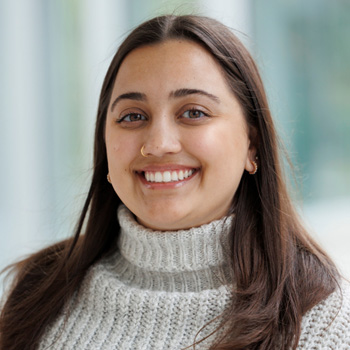
Krishna Kolen, PhD Student Weather-related poor air quality from wildfires and dust storms is having adverse impacts on people living in Canada. Mistawasis Nêhiyawak, a First Nation community in central Saskatchewan, is experiencing these impacts firsthand. At their request, we have partnered with Mistawasis to explore what tools, strategies, and monitoring approaches can help to better understand and reduce health impacts. We will be working collaboratively with the Mistawasis Health and Lands Departments, Elders, and youth to understand who is impacted and how to raise awareness about poor air quality and associated health impacts. A key outcome of this research is to co-create strategies with data that are owned by the community and contribute to Indigenous data sovereignty, climate adaptation, and resilience. The outputs from this project can be used by Mistawasis leadership to inform context- and community-specific strategies to adapt to and mitigate impacts of poor air quality events. Further reading |
Anticoagulant clinical trial could change care for patients with blood clots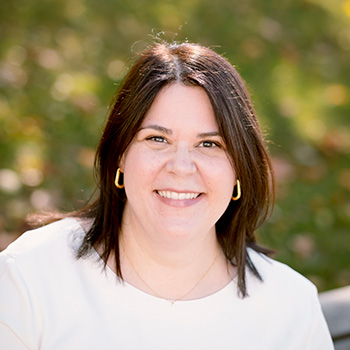
Dr. Lana Castellucci Venous thromboembolism (thrombosis) is a serious health concern involving blood clots in the veins of the legs. Affecting approximately 50,000 people each year in Canada, this condition can lead to complications such as pulmonary embolism, which is when blood clots travel to the lungs. Doctors often prescribe anticoagulants such as apixaban and rivaroxaban to treat blood clots, but a side effect is bruising or internal bleeding. A CIHR-funded clinical trial led by Dr. Lana Castellucci compared the bleeding risk of these medications when given to patients newly diagnosed with thrombosis. Involving 2,760 participants in 32 sites across Canada, Australia, and Ireland, the COBRRA study found that apixaban reduced bleeding by more than 50% compared to rivaroxaban. For people living with venous thromboembolism, this means fewer risks. "Patients with thrombosis often live with the dual fear of recurrence and bleeding, so knowing that a safer treatment option is available brings real peace of mind," says one trial participant. Dr. Castellucci's clinical trial began as a pilot study funded by CanVECTOR, a network that has advanced research on venous thromboembolism in Canada for a decade. The success of the pilot study led to the larger international clinical trial. Dr. Castellucci reflects that, by investing in CanVECTOR, CIHR "has helped build a community of researchers and patient partners who are working to make care safer and more effective—not just in Canada, but globally." Further reading |
Changing the game: Building safer sports for youth in Canada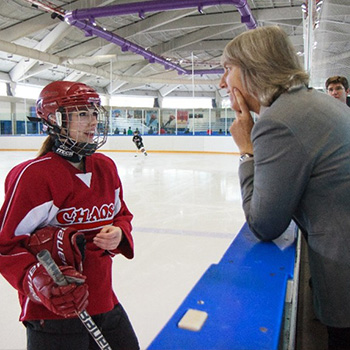
Dr. Carolyn Emery, PhD, PT The benefits of sports are huge, but they come with risks too. In Canada, one in three youth aged 10 to 24 get hurt playing sports each year. These injuries can lead to reduced levels of physical activity, post-traumatic osteoarthritis, poor mental health, and prolonged concussion symptoms, among others. With CIHR funding, I lead SHRed Injuries, a Canadian community-based research program tackling risk factors and evaluating prevention strategies to reduce injuries and their consequences in youth sport. My research has reduced rates of injury in youth sports.
Further reading
X (Twitter): @CarolynAEmery |
Beyond the beat: When movement feels out of reach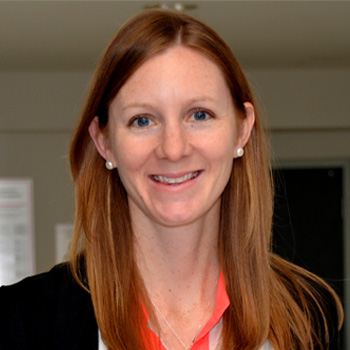
Dr. Jennifer Reed Exercise is essential to improve heart health, but for people living with persistent and permanent atrial fibrillation, even simple movement can feel overwhelming. Fatigue, anxiety, and fear of complications often make it hard to know where to start. Dr. Jennifer Reed conducted a clinical trial with 86 patients with atrial fibrillation, comparing the effects of two different programs: High-Intensity Interval Training (HIIT)–short bursts of activities followed by rest–and continuous moderate-intensity exercises. Both training programs proved safe and improved life quality, fitness level, and heart health in patients with atrial fibrillation. Twenty-three minutes of HIIT twice a week offered similar benefits to one hour of continuous moderate-to-vigorous exercise twice a week. The results suggest that patients don’t need to follow a one-size-fits-all plan to improve their heart health. Cardiovascular rehabilitation and center-based exercise programs can offer patients the choice between these two approaches, helping them regain confidence and take control of their health. Further reading |
Genetic breakthrough RAPID GENE brings personalized heart treatment to the bedside
Dr. Derek So A heart stent procedure restores blood flow with a tiny tube inserted into an artery. Patients undergoing this procedure are often prescribed clopidogrel to prevent blood clots. However, the drug does not work for everyone. Genetic lab tests can identify who will benefit, but the results can take days or weeks. In emergencies, there's no time to wait. Giving the wrong medication can lead to serious complications. To solve this problem, Dr. Derek So partnered with Spartan Bioscience. Their RAPID GENE study resulted in a genetic test capable of providing life-saving results quickly. The test detects a genetic variation which prevents the body from properly metabolizing clopidogrel. This means that patients carrying this mutation will not respond to clopidogrel after a heart stent procedure, putting them at serious risk of developing blood clots. Dr. So's team found that the drug prasugrel was an effective alternative for these patients. The test is easy to use. "All genetic testing in the clinical trial was done by clinical nurses who had only a half-hour training session," explains Dr. So. With genetic results available at the bedside, "we are giving the right drug to the right patient, right away." Dr. So's team published their findings in 2012, sparking follow-up clinical trials such as RAPID STEMI and TAILOR-PCI, which influenced global adoption of genotype-guided therapy. Further reading
|
Improving arthritis care in Indigenous communities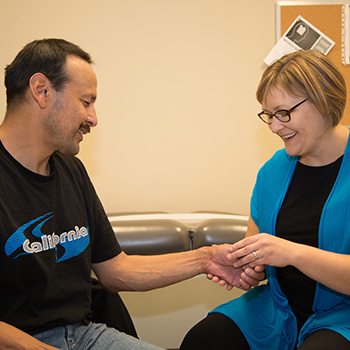
Dr. Cheryl Barnabe, MD, MSc, FRCPC Inflammatory arthritis, including conditions such as rheumatoid arthritis, disproportionately impact Indigenous communities in Canada because of limited access to high-quality health care services. To address these disparities, we are working closely with Indigenous communities and patients to create solutions that meet their needs. A key outcome of this joint effort is the 'Arthritis Liaison' program. This initiative embeds a trusted community member in the health care team to help patients navigate the system and achieve personal health goals. The program also builds a strong network for peer support within the community. As part of this program, we developed patient decision aids to facilitate shared decision-making between Indigenous patients and health care providers. These tools help Indigenous patients understand their arthritis treatment options, weighing risks and benefits of these treatments, and aligning treatment choices with their preferences, expectations, and values. Further reading |
- Date modified: