Celebrating Black Excellence in Cancer Research
Recognizing the leadership, contributions, and partnership of Black researchers and people with lived and living experience across the cancer research ecosystem
From uplifting lived experience to forging emerging scholarship and providing scientific leadership, Black researchers and people with lived and/or living experience (PWLLE) have worked tirelessly to move the needle towards a more advanced and equitable cancer care system. This Black History Month, the CIHR Institute of Cancer Research (ICR) is celebrating Black members of the cancer research community by highlighting their contributions and achievements, which have championed inclusivity, community-oriented approaches, and partnership.
Learn more about how Black researchers and PWLLE are driving change in Canadian cancer care:

"My advocacy is motivated by the belief that every patient deserves to be seen, heard and supported during and beyond diagnosis. I hope my work helps normalize humanity in healthcare—where lived experience informs research, compassion guides care and patients feel empowered to advocate for themselves and for others walking this path."
Dawn Barker
TNBC Breast Cancer Survivor
Patient Advocate and Engagement Specialist
Dawn Barker is a Canadian breast cancer survivor and the Founder of NUY50, a patient-led advocacy initiative rooted in lived experience. After being denied baseline breast screening in her 40s, Dawn found herself navigating a triple-negative breast cancer (TNBC) diagnosis—a type of breast cancer that disproportionately affects women of colour, specifically those of African ancestry. Her lived experience inspired her journey into meaningful advocacy focused on health equity, culturally responsive care and patient partnership in research. She advocates to amplify underserved voices—particularly for Black women—to bridge gaps between patients, clinicians and researchers.
Dawn has partnered with national cancer organizations, contributed to advisory panels and participated in conferences and programs focused on survivorship, well-being and patient engagement, including ICR's Bringing Biology to Cancer Survivorship Workshop. Her advocacy blends storytelling, raising awareness and developing compassionate tools that support emotional resilience and system change.
Dawn's Tagline is "Don't Wait, Advocate©"
Related reading:
- Canadian Task Force on Preventive Healthcare (Patient Partner)
- International Psycho-Social Oncology World Congress (Co-presenter and Poster Co-author)
- Women's College Hospital Every Breast Counts Hub
Social media:

"I am passionate about improving cancer outcomes and ensuring that research and treatments reach as many patients as possible. Eliminating systemic barriers to accessing health care is a key way to ensuring that all patients have access to cancer breakthroughs. Research is most gratifying when it drives change either by helping cancer patients live longer or feel better."
Dr. Doreen Ezeife
Clinical Associate Professor & Medical Oncologist, Cumming School of Medicine, Department of Oncology, University of Calgary
Dr. Doreen Ezeife's research focuses on advancing cancer care and health equity, with a particular focus on lung and breast cancer clinical trials. She led an important clinical trial (FLAURA2), which revealed that when combined with chemotherapy, osimertinib—a type of cancer treatment drug—showed improved survival for patients with advanced lung cancer. This work provides a promising new treatment option for people with metastatic EGFR-mutated non-small cell lung cancer.
Dr. Ezeife also focuses on addressing racial disparities in cancer care. Her research has shown that the burden of certain cancers is higher in Black patients in Canada, revealing a number of systemic barriers that limit their access to cancer screening, testing, and treatments. This work garnered media attention from the CBC, CTV and Global News, highlighting the importance of equalizing access to high-quality cancer care for Black patients in Canada.
Related reading:
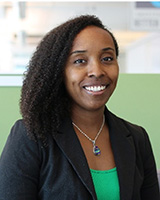
"My experience navigating Pap testing, alongside past work with racialized communities about cervical cancer screening and organizations delivering care to these communities inspired this research. The best part of my research is building partnerships and learning from community members. I hope my research will impact policy change and increase HPV and screening awareness, ultimately helping to save lives."
Dr. Nakia Lee-Foon
Health Equity Research Lead, Institute for Better Health, Trillium Health Partners
Cervical cancer is the third most diagnosed cancer among women and people with a cervix (WPC) in Ontario. It is primarily caused by human papillomavirus (HPV) infection and can be largely prevented with HPV vaccination and regular screening. Black WPC in the Peel region remain under-screened—a gap exacerbated by COVID-19 delays and limited primary care access. HPV self-sampling (HPVSS) offers a flexible, empowering screening option by enabling people to collect their own samples when and where they want.
As Ontario works to adopt HPVSS, a culturally tailored educational program is needed to prevent continued under-screening. Dr. Nakia Lee-Foon, a recipient of the CIHR Research Excellence, Diversity and Independence (REDI) Early Career Transition Award, is leading the co-development and evaluation of such a program. She is working closely with service providers and Black WPC to co-create a program that supports informed HPVSS decision making. Dr. Lee-Foon's research aims to increase HPV and HPVSS awareness among Black WPC and may inform similar programs for other under-screened communities.
Related reading:
Social media:
- Date modified: