Meet the inaugural cohort of the AACR-CIHR Scholar-in-Training Awards
The CIHR Institute of Cancer Research (ICR) partnered with the American Association for Cancer Research (AACR) to co-establish the AACR-CIHR Scholar-in-Training Awards (SITAs). The SITAs supported trainees across graduate and post-graduate levels from Canada to attend and present their research at the 2025 AACR Annual Meeting, the world's largest cancer research conference.
In April 2025, the first cohort of AACR-CIHR Scholar-in-Training Awards attended the AACR Annual Meeting in Chicago and presented their research. Learn more about how this experience impacted their research programs:
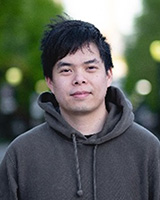
Nathan Duong
PhD Student, Princess Margaret Cancer Centre
Supervisor: Dr. Aaron Schimmer
Research Area
Nathan is investigating cytokine receptor IL-23R's unique location and function in Acute Myeloid Leukemia cells and its potential as a novel therapeutic target for this disease.
Impact of AACR
"Attending the AACR Annual Meeting was a great opportunity to present my own findings as well as to learn about the vast scope of work from the international cancer research community. As a researcher, it was invaluable to learn about cutting edge research both in my area of blood cancers as well as in other cancers. As a cancer survivor, it was motivating and optimistic to see the tireless work from the international research community that continues to spearhead the fight against cancer."
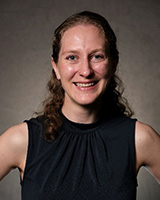
Olivia Grafinger
Postdoctoral Fellow, Sunnybrook Research Institute/University of Toronto
Supervisor: Dr. Hon Leong
Research Area
Dr. Grafinger's research area of interest is translational science. Using an avian embryo model, she has developed a platform for testing human tumour sample response to immunotherapies. Proof-of-principle experiments support the use of this platform and prove its reliability in assessing how a patient will respond to a given treatment option.
Impact of AACR
"Attending the AACR Annual Meeting impacted and supported my research because it gave me an opportunity to attend various in-person sessions with the Women in Cancer Research group. This gave me a chance to learn and network with other women in my field. Notably, the Women and Power workshop provided me valuable strategies and insight for advancing my career and harnessing my inner strengths. I was able to meet many inspirational women, including other researchers early in their careers, and exchange contact information so that we can continue to interact and collaborate in the future."
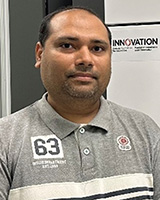
Naimul Hasan
PhD Student, University of Toronto/Princess Margaret Cancer Centre
Supervisor: Dr. Mohammad Mazhab-Jafari
Research Area
Naimul studies how protein dynamics regulate lipid metabolism in cancer. By uncovering how these processes become dysregulated in tumors, his research aims to guide the design of targeted therapies that disrupt metabolic vulnerabilities in cancer cells.
Impact of AACR
"Attending the AACR Annual Meeting expanded my understanding of cancer biology beyond structural insights. A key takeaway was the emphasis on protein dynamics and context-dependent vulnerabilities, which aligns with my structural work on metastable complexes. I also connected with a potential collaborator in a similar research area, opening opportunities to bridge structural and functional studies. Overall, the meeting sharpened my research questions and reinforced the translational relevance of my research."

Shana Kim
PhD Student, University of Toronto
Supervisor: Dr. Jennifer Brooks
Research Area
Shana's work aims to improve the lives of people affected by cancer through prevention and survivorship research. She specializes in using large datasets and applying modern epidemiologic methods. Specifically, her dissertation leverages routinely collected blood tests to determine long-term mortality risk in breast cancer survivors.
Impact of AACR
"Attending the AACR Annual Meeting was a wonderful experience. The meeting allowed me to learn about the most up-to-date cancer research, receive important feedback on my dissertation work, and connect with many past and future collaborators. It was very exciting to be in an environment that sparked new ideas and witness the future direction of cancer research."
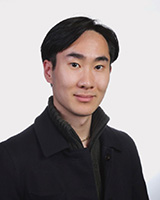
Peter Lin
PhD Student, University of Toronto/Princess Margaret Cancer Centre
Supervisor: Dr. Linda Penn
Research Area
Peter's research focuses on targeting the MYC protein in cancer. MYC is known to be dysregulated in most human cancers and drives aggressive disease. To target MYC and inhibit its function, he aims to identify specific proteins required for MYC to function as a cancer driver. To date, he has characterized several novel proteins as promising approaches to targeting MYC-dysregulated cancers.
Impact of AACR
"I found the AACR Annual Meeting to reflect the current frontier of cancer research. It was a privilege to learn about cutting-edge advances, including new insights into extrachromosomal DNA and its role in MYC dysregulation. Beyond the science, a major highlight was connecting with both new and familiar colleagues. The conference's breadth offered a strategic perspective on my research, which was invaluable in contextualizing and positioning my work within the global scientific community."

Vincent Maranda
PhD Student, University of Saskatchewan
Supervisors: Dr. Franco Vizeacoumar & Dr. Andrew Freywald
Research Area
Vincent's research targets a gene called hTERT, which is hyperactive in nearly all cancers. We use a genetic strategy called synthetic lethality to find weak spots in cancer cells that rely on hTERT. By identifying and blocking these weak spots with new or repurposed drugs, we aim to develop treatments that selectively kill cancer cells while sparing our healthy cells.
Impact of AACR
"The AACR Annual Meeting sharpened my research by giving me clearer strategies to exploit synthetic lethality—targeting paired gene weaknesses in cancer cells—and by showing practical computational tools for pinpointing new drug targets. My poster presentation sparked valuable feedback and opened collaborative discussions with scientists from academia and industry alike. These insights and connections are already guiding refinements to my experimental design and helping chart the next phase of my work on developing cancer therapeutics."

Kiera Murison
PhD Student, University of Toronto
Supervisor: Dr. Rayjean Hung
Research Area
Kiera studies at the intersection of infections and infectious pathogens, and cancer. Her thesis aims to examine the effects of infections on cancer risk and cancer outcomes.
Impact of AACR
"Attending the AACR Annual Meeting allowed me to connect with likeminded researchers and find collaborators. I also gained valuable insights into how to strengthen my current work. I was able to meet other researchers early in their careers and left conversations feeling inspired and appreciative of all the various disciplines within cancer research. From this, I gained an important perspective about the big picture when pursuing my research."

Noor Shakfa
Postdoctoral Fellow, Lunenfeld-Tanenbaum Research Institute
Supervisor: Dr. Hartland Jackson
Research Area
Dr. Shakfa studies the complex ecosystem of pancreatic tumors, made up of diverse cancer, immune, and stromal cells. Using advanced imaging and molecular techniques, she maps how these cells interact across hundreds of patients to better understand survival outcomes and uncover new therapeutic strategies.
Impact of AACR
"Attending AACR gave me the most up-to-date understanding of current clinical directions in pancreatic cancer, including trials and biomarker efforts. It was an opportunity to have meaningful discussions with collaborators on how to better integrate spatial, genomic, transcriptomic, and proteomic data, which directly informs my current work. Most importantly, the meeting helped me position our research within the broader field and identify where it can have impact."
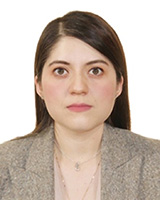
Pam Soberanis
Clinical Research Fellow, Princess Margaret Cancer Centre
Supervisor: Dr. Stéphanie Lheureux
Research Area
Dr. Soberanis' main areas of research are gynecological cancer and drug development. Her current projects are focused on studying the molecular landscape and expression profile of proteins and genes of patients with recurrent ovarian cancer and endometrial cancer and how HPV integration can impact patients with different subtypes of advanced cervical cancer in order to develop novel therapeutic interventions.
Impact of AACR
"Bringing more effective therapies to the clinic is at the very heart of medical oncology and this meeting provided me new knowledge on this topic. It was a great opportunity to meet other international colleagues from the gynecological field—there was a deep sense of community. Sharing my research and learning from others was very enriching for my future practice."
- Date modified: