Mapping the mind: How brain wiring protects mental health
By discovering how specialized proteins physically lock together to control brain wiring, Dr. Hideto Takahashi is laying the groundwork for a new class of treatments for anxiety, panic disorders, and autism.
Every single thing we do—walking, talking, or feeling anxiety—relies on a constant conversation between cells throughout the brain.
The brain contains billions of cells called neurons that talk to each other across microscopic gaps called synapses. For this communication system to work smoothly, these connection points must be flawlessly structured. If they become unstable or disorganized, messages get scrambled, which can lead to mental health challenges.
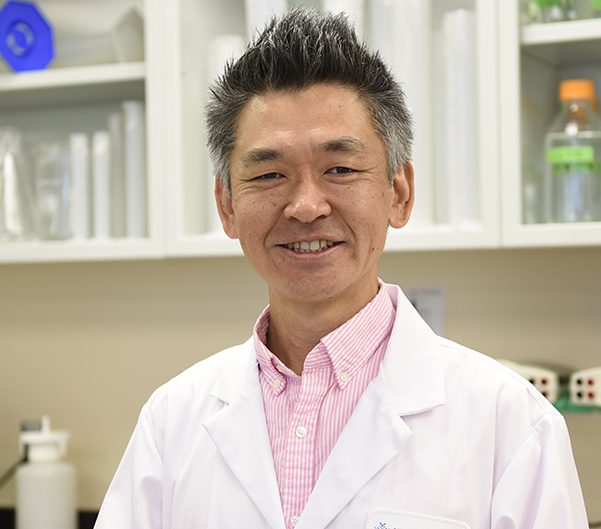
Dr. Hideto Takahashi, a researcher and professor, is dedicated to understanding how these connection points are assembled and what happens when they break down. His team discovered that two specific proteins—PTPσ on the sending cell and TrkC on the receiving cell—physically lock together across the gap. This protein pairing acts as a structural anchor to hold the connection together. His research further revealed that the link acts as a control switch for a whole network of other essential proteins, including those genetically linked to autism, schizophrenia, and intellectual disabilities.
To see how this molecular lock affects behavior, Dr. Takahashi’s lab studied what happens when this specific protein connection is blocked. Without this structural anchor, the brain's communication points became completely disorganized. This single physical flaw caused distinct behavioral changes in laboratory animal models, including severe anxiety, a tendency to avoid new environments, and significant social difficulties.
Dr. Takahashi’s discovery provides a vital missing link for human health. For years, scientists knew the human TrkC gene was linked to anxiety, but they didn't understand the physical cause. The behaviors seen in Dr. Takahashi's lab closely mirror human panic disorder and agoraphobia (the intense fear of being in places where escape might be difficult).
Beyond explaining disease mechanisms, the research points toward a fundamentally new approach to treatment. Current anxiety medications primarily target floating brain chemicals like serotonin. Dr. Takahashi’s findings reveal a completely different approach: instead of just balancing chemicals, future medicines could repair the physical structure of the brain's wiring itself.
His long-term vision is to use the exact physical shape of this protein connection to develop new, targeted molecules or small proteins that can stabilize weak connections and physically restore normal communication lines in the brain.
"Our discovery shows that this organizing mechanism is a vital, common pathway," says Dr. Takahashi. "Manipulating these molecules could pave the way for innovative treatments to ease or cure brain dysregulation associated with many different disorders."
Breakthroughs of this kind depend on years of steady support. Since 2013, sustained funding from CIHR has enabled Dr. Takahashi's lab to solve these structural mysteries step by step. Today, they are already expanding this groundwork to develop new treatments that target social impairments in autism and rescue memory loss in Alzheimer's disease.
At a glance
Issue
Current anxiety and panic disorder medications focus on brain chemicals like serotonin. These medications do not work for everyone and often only manage symptoms rather than fixing the underlying physical flaws in brain communication.
Research
Dr. Hideto Takahashi discovered that two proteins, PTPσ and TrkC, must physically bind together to anchor the gaps between brain cells and control the network that keeps signals moving reliably. By mapping how a broken protein connection drives panic and social avoidance, this research opens up a new pathway for treatments. It enables scientists to design future therapies that structurally repair brain wiring, offering new hope for anxiety, autism, and Alzheimer's disease.
- Date modified: