Health System Impact Fellowship – 2026 Fellow Profiles
| Profile: |
|---|
 Exploring what genetic counsellors can do to help children with complex medical needs and their familiesName: Tasha Wainstein About You & Your Fellowship Program of Work:I am a genetic counsellor and applied health researcher. I’ll be collaborating with children with complex medical needs and their families to explore the best way to include genetic counsellors in their medical and psychological care teams. My goal is to improve care by making genetic support more accessible and better connected to the care they receive throughout their journeys. |
 Roots & Resilience: Métis Youth‑Centered Vaping Cessation StrategyName: Hayley Pelletier About You & Your Fellowship Program of Work:My research with Lung Sask will involve developing an evidence-based vaping cessation strategy to reduce youth vaping rate amongst Indigenous youth in Saskatchewan. At present, there is no-widely accepted or implemented strategy for vaping cessation in the province. The project will leverage and integrate existing working relationships with Métis Nation Saskatchewan to co-develop, pilot, and evaluate an intervention that is rooted in a Two-Eyed Seeing approach. |
 Impact and effectiveness of HPV vaccinationName: Addisu Jember Zeleke About You & Your Fellowship Program of Work:My research evaluates the population-level impact and dose-specific effectiveness of HPV vaccination on high-grade precancerous lesions, and cervical and oropharyngeal cancers in Alberta. Using linked administrative health data, I will apply advanced statistical methods and machine learning to estimate vaccine effectiveness and identify inequities in protection. My goal is to generate actionable evidence to strengthen immunization policy and cancer prevention. |
 Community-Based Primary Prevention to Reduce Adolescent Substance Use and Promote WellbeingName: David Borkenhagen About You & Your Fellowship Program of Work:My research focuses on improving youth mental health and reducing substance use by strengthening the protective effects of social and built environments. I pursue this work because I believe that communities strongly shape youth well-being. I hope to advance equitable, data-informed, and youth-led prevention initiatives that create lasting change in the places where young people grow up. |
 Strengthening Early Career Nurse Practitioner Workforce Integration: Understanding How Role Transition Impacts Retention and System PerformanceName: Rebecca Bingley About You & Your Fellowship Program of Work:My embedded research focuses on the transition of early career nurse practitioners into clinical practice in British Columbia. I am pursuing this work to strengthen health workforce integration and support new nurse practitioners during a critical career stage. I hope to generate evidence that informs transition supports, improves workforce retention, and contributes to a more sustainable health care system. |
 Strengthening the Safe and Effective use of AI-Augmented Clinical Decision Support Tools in Acute Care in Alberta: Co-designing a Provincial Innovation Strategy to Improve Patient FlowName: Danielle Fox About You & Your Fellowship Program of Work:AI-augmented clinical decision support tools hold transformative potential for improving patient flow, but their integration into complex health systems is challenging. This research will map how these tools are used in acute care, co-create a vision for an AI-enabled Learning Health System, and co-design a provincial innovation strategy to strengthen Alberta's capacity for equitable, safe, and effective digital health integration. |
 Supporting self-management, organization and integration of care: development and implementation of a patient learning pathway for hereditary connective tissue disordersName: Catherine Côté About You & Your Fellowship Program of Work:My research aims to develop a navigation map to improve care trajectories for people living with complex conditions. I want to help reduce inequalities, strengthen continuity of care and support patient autonomy. I want to make a lasting contribution to more coherent and efficient health care systems that are focused on the real needs of populations. |
 Fostering Collaboration to Support Screening, Brief Intervention and Referral Adoption and Scale-Up in AlbertaName: Nana Ama Efurma Adjabeng About You & Your Fellowship Program of Work:Lifestyle risk factors drive the growing burden of chronic disease, yet screening, brief intervention, and referral (SBIR) remain underutilized in healthcare settings. My PhD uses embedded implementation research to partner with providers and decision-makers to scale up SBIR using electronic health records. I hope to contribute co-produced, equitable recommendations that support the integration of SBIR into routine care. |
 Building a Case for Community-Led Mental Healthcare: Evaluating BC’s Crisis Response ServiceName: Casey Chu About You & Your Fellowship Program of Work:I will be conducting an economic evaluation of the Crisis Response, Community Led (CRCL) service in BC as a compassionate, culturally appropriate alternative to emergency services. I am motivated to deepen the evidence for community based mental health care that supports people where they live. My goal is to generate knowledge that strengthens crisis systems grounded in dignity, equity, and community needs. |
 Strengthening Primary Care Capacity for Dementia Assessment in Adults with Intellectual DisabilitiesName: Marie-Joelle Beaudoin About You & Your Fellowship Program of Work:My embedded research focuses on aging and intellectual disabilities, with the goal of supporting frontline practitioners conducting dementia assessments in this population. People with intellectual disabilities are five times more likely to develop dementia, yet services remain poorly adapted. My work promotes earlier, equitable dementia care through bilingual (French and English) knowledge mobilization and practice support. |
 Automation of a standardized clinical assessment using existing electronic health record documentationName: Lorraine J. Block About You & Your Fellowship Program of Work:This embedded research will explore how to automate parts of a standardized clinical assessment through the reuse of information already documented in the electronic health record. By using terminology mapping methods and natural language processing techniques, this work will aim to reduce documentation burden, improve clinical experience, and advance efficiencies in care delivery. |
 Laying the Groundwork and Building Strategic Capacity for Older Person-Inclusive Climate ActionName: Tara T. Chen About You & Your Fellowship Program of Work:Guided by the motto “everything and everywhere is public health”, my work with the IFA will focus on strengthening organizational capacity to address the intersection of climate change and healthy ageing, generating practical knowledge and processes to support age-inclusive climate advocacy, policy, and action. |
 Equity by Design: Co-Producing Quality Improvement Evaluation in Nova ScotiaName: Gianisa Adisaputri About You & Your Fellowship Program of Work:My embedded research focuses on co-producing an equity-focused quality improvement evaluation framework in Nova Scotia. I pursue this work to ensure health system improvements are guided by the experiences of underserved communities and frontline providers. By embedding research within decision-making processes, I aim to advance more accountable, inclusive, and equitable health system transformation that improves access and outcomes. |
 Care Without Walls: Advancing Mental Health Access in BC CorrectionsName: Lotenna Olisaeloka About You & Your Fellowship Program of Work:I am a physician-scientist whose clinical and research experience across Nigerian, British, and Canadian health systems has shown me firsthand how underserved populations fall through the cracks. My fellowship embeds me within British Columbia's health system to support the implementation of mental health units in correctional settings, improving access to integrated, recovery-oriented care for a vulnerable population too often left behind. |
 Integrating Patient Voices into Alberta Rheumatology: Best Practices and Pathways ForwardName: Racheal Githumbi About You & Your Fellowship Program of Work:Standardized outcome measures are central to guideline-based Rheumatoid Arthritis (RA) care yet remain underutilized. My project leverages implementation science to facilitate routine collection of patient-reported outcome measures (PROMs) among individuals living with RA in Alberta. This work will improve assessment and monitoring for thousands of RA patients and establish a foundation for broader PROM implementation across other chronic conditions. |
 Toward Seamless Transitions: Embedding Equity-Oriented Digital Pathways in Mental Health CareName: Julia Wong About You & Your Fellowship Program of Work:I am a digital health researcher studying how health information systems can better support equitable transitions in mental health care. Working with health system partners, I examine how digital pathways can improve continuity across care settings. My goal is to help build more equitable, coordinated learning health systems that enable seamless transitions. |
 Equity-driven responses to enhance how older adults prepare for and protect their health from extreme heat, cold, and wildfire smokeName: Callista Ottoni About You & Your Fellowship Program of Work:My research strengthens health system organizations’ capacity to support older adults’ health during extreme heat, cold, and wildfire smoke events. I strive to reduce climate-related harms and support older adults’ health through evidence-informed responses. My goal is to learn from diverse older adults’ lived-experiences to improve health system and community interventions (policies, programs, tools, strategies) and advance health equity. |
 Leveraging implementation science to improve tobacco cessation services in long term care and outpatient care settings in British ColumbiaName: Sameh Mortazhejri About You & Your Fellowship Program of Work:I conduct embedded implementation science research to improve how evidence-based care is delivered in health systems. My HSIF project focuses on improving smoking cessation support in different healthcare settings in British Columbia. By working with people with lived experiences, clinicians, and health leaders, I aim to develop equitable and sustainable approaches that make effective care easier to deliver and access. |
 Evaluation of innovative referral pathways and digital tools for early Parkinson’s CareName: Pushpita Samina About You & Your Fellowship Program of Work:My research addresses health system challenges through economic evaluation and policy analysis. I am dedicated to enhancing early Parkinson’s Disease care by assessing innovative referral and digital solutions and tackling delays caused by fragmented pathways and limited resources. By leveraging Artificial Intelligence, aligned infrastructure, stakeholder partnerships, and real-world data, my goal is to improve population outcomes and optimize system performance. |
 Improving Care and Reducing Overdose Risk for People Leaving Jail After COVID-19Name: Kimberly Rondeau About You & Your Fellowship Program of Work:My research examines how COVID-19 has affected the health and overdose risk of people incarcerated in British Columbia’s provincial correctional centres. I pursue this work to address the intersecting crises of substance use, mental illness, and health care in this population. I aim to generate evidence that improves care continuity, reduces overdose deaths, and supports safer transitions to the community. |
 Fair Share, Trusted Care: Advancing Health Equity through Justice-Based and Community-Centred Public Health FrameworksName: Kate Enright About You & Your Fellowship Program of Work:This collaboration seeks to understand different concepts of equity in public health, to clarify how these differences impact health outcomes, and to generate practical tools that safeguard fairness and trust. I hope to make a lasting and just contribution via this project, which perfectly aligns my professional passions and global experiences of tackling inequitable access and equity in health. |
 Enhancing Transitional Care for Hospitalized Patients who are Designated as Alternate Level of Care (ALC)Name: Ahmad Deeb About You & Your Fellowship Program of Work:My research focuses on improving hospital care and patient safety. My PhD explores nurses’ contributions to preventing, early detection, and response to clinical deterioration, while my fellowship evaluates innovative discharge models for patients in the Alternate Level of Care (ALC). I aim to produce evidence that informs policy and improves care transitions, patient outcomes, and hospital capacity. |
 Optimizing the use of patient-reported outcome measures in clinical decision-making to advance person-centred cancer careName: Christian Lopez About You & Your Fellowship Program of Work:Effective symptom management remains a priority challenge in cancer care, yet patient-reported outcome measures (PROMs) that support responsive clinical decision-making are underused in practice. My research aims to optimize clinician adoption of Cancer Care Alberta’s PROM system, MySymptom Report, by applying implementation science approaches to identify barriers, co-design strategies, and evaluate their impact, with the goal of advancing person-centred care. |
 Who is in our samples, and what can we say about people who are not? Examining study sample definition in health administrative database and generalizability to target populations for substance use epidemiology in British Columbia.Name: Addie Carter About You & Your Fellowship Program of Work:My research applies fundamental and advanced epidemiologic concepts to better understand current limitations in substance use epidemiology. I aim to help the Ministry of Health better recontextualize substance use epidemiology, especially, in translating quantitative estimates to policy. The goal is to help key stakeholders make more informed decisions that hopefully results in better policy — ultimately, resulting in a healthier society. |
 Free Birth Control in BC: Who Is Still Being Left Behind?Name: Elizabeth Nethery About You & Your Fellowship Program of Work:Universal coverage does not guarantee equitable access. My embedded research applies population-level data and policy evaluation methods to understand how health policies shape access to care. Through my fellowship, I will evaluate British Columbia's free contraception policy to identify who benefits and where inequities remain, generating evidence to guide more equitable reproductive health policies that improve access for all. |
 Digital Intelligence for Modern Health SystemsName: Shahan Salim About You & Your Fellowship Program of Work:As countries modernize health systems, Dr. Salim’s work at the OECD examines how digital health is reshaping health systems to detect and respond to emerging health risks. His research advances the integration of AI and advanced analytics within health systems to enable earlier detection and more effective responses, particularly for populations disproportionately affected by climate-related and other emerging health threats. |
 Integrating Clinical Exercise Physiologists into Primary Care: A Hybrid Type 2 Trial to Improve Physical Function and Activity in Older AdultsName: Brianna Leadbetter About You & Your Fellowship Program of Work:I am passionate about the role of exercise prescription in chronic disease management and healthy aging. My research aims to identify the barriers and facilitators to integrating qualified exercise professionals into primary care settings in Canada, ultimately providing strategies for provincial healthcare systems to embed exercise professionals into collaborative health teams to help older adults age in place. |
 Knowing Who We Serve: A Rural Ontario Health Team’s Equity Data ProjectName: Vivian Yejide Kilanko About You & Your Fellowship Program of Work:Vivian Yejide Kilanko is a fourth-year Health Quality PhD student and a registered social worker in children’s mental health. Her embedded research focuses on standardizing the collection of sociodemographic data for equity-denied patient populations, helping the Chatham-Kent health system consistently identify, monitor, and address health inequities. |
 Unpacking the Workload of Community-Based Personal Support Workers: A Path Toward Smarter ManagementName: Kate Posluszny About You & Your Fellowship Program of Work:Playing a critical role in providing at-home care, a limited number of community-based personal support workers (PSWs) are supporting a rapidly aging population that remain in-place. To mitigate and prevent the already high rates of low back musculoskeletal disorders and mental stress injuries, my research aims to better monitor and manage PSWs’ physical and psychological demands at a system-level. |
 Community-Based Research Training in the Northwest TerritoriesName: Janat Ibrahimi About You & Your Fellowship Program of Work:My embedded research supports the development of a community-based research training program in the Northwest Territories that strengthens local research capacity in northern communities. I pursue this work because research should be grounded in community priorities and knowledge. I hope to contribute to more equitable, culturally responsive health systems and support community-led research across the North. |
 Building New Brunswick's First Practice-Based Research and Learning Network (PBRLN)Name: Amy MacQuarrie About You & Your Fellowship Program of Work:With the current demands on the healthcare system in New Brunswick, a Patient-Based Research and Learning Network (PBRLN) will help improve the delivery of care and integrate research into primary care clinics. I hope to create meaningful changes in healthcare innovation and practice by expanding my area of research, networking, and collaborating with professionals from a range of backgrounds. |
 Enhancing Evidence-Based Opioid Use Disorder Care Through Evaluation of System-Level Reforms in British ColumbiaName: Yuetong Zhou (Vivienne) About You & Your Fellowship Program of Work:Changes in opioid use disorder (OUD) care in BC have been rapid since the 2016 public health emergency. Partnering with Vancouver Coastal Health, this project uses real-world data and causal inference methods to evaluate recent treatment and policy reforms. Findings will generate actionable evidence to improve care for OUD patients and inform clinical and policy decision-making across BC and beyond. |
 Understanding the Epidemiology and Service Needs of Substance-Induced Mental Disorders (SIMDs) in OntarioName: Mana Mohebbian About You & Your Fellowship Program of Work:My research examines substance-induced mental disorders as a critical yet overlooked consequence of problematic substance use. Building on my doctoral work in British Columbia, I now study their burden across Ontario and evaluate related mental health and addiction services. I hope to identify care gaps and generate evidence that guides policy, resource allocation, and more integrated support for affected population. |
 Investigating the Canadian Mental Health System for Improvement and EfficiencyName: Rishika Selvakumar About You & Your Fellowship Program of Work:My research with CMHA will focus on analyzing the economic efficiency of parent-based early childhood interventions. Mental health continues to be a growing issue, and both responsive and preventative projects are a key interest of mine, especially in relation to health economics. The results will assist with resource and funding planning. |
 Between Efficiency and Equity: Assessing the Feasibility of an Innovative Method for the Economic Assessment of Mental Health TechnologiesName: Alexandra Chapdelaine About You & Your Fellowship Program of Work:Distributional cost-effectiveness analysis combines efficiency and equity in the assessment of health technologies by examining the distribution of health benefits across the population. This project aims to lay the methodological groundwork for the application of this analysis in the field of mental health in Quebec, with the goal of moving toward a more equitable allocation of resources. |
 Supporting Recovery: Trauma-Informed Treatment for Women with Concurrent DisordersName: Ekatrina Kiddie About You & Your Fellowship Program of Work:Women with co-occurring mental health and substance use challenges often experience repeated involvement with health, social, and justice systems. My research examines how trauma-informed treatment at the Heartwood Centre for Women may disrupt this cycle by supporting recovery, reducing trauma-related symptoms, and improving women’s treatment outcomes. Through this work, I aim to advance evidence-based and gender-responsive care for women with complex needs. |
 Fit-for-purpose statistics for health system improvement: a focus on outcomes in pragmatic trialsName: Bin Luo About You & Your Fellowship Program of Work:My research will focus on developing and applying statistical methods, which will enable a more precise analysis of outcomes measured using provincial administrative healthcare data in pragmatic randomized trials embedded in routine care. These trials are valued for producing high-quality evidence on the real-world effectiveness of health interventions. |
 Strengthening access to sexually transmitted infection testing in the Vancouver regionName: Marnie Yimeng Wang About You & Your Fellowship Program of Work:My research evaluates ED-based opt-out and patient-initiated STI testing to address rising syphilis rates. I am motivated to bridge gaps for populations facing structural barriers to care. I hope to provide the evidence needed to scale these low-barrier models, ensuring equitable access and working toward the elimination of congenital syphilis. |
 Assessing and Improving Learning Health System Capabilities across Clinical Programs at Trillium Health PartnersName: Victor Rentes About You & Your Fellowship Program of Work:My research sits at the intersection of learning health systems and implementation science. Embedded at Trillium Health Partners, I study how clinical teams develop the capacity to learn from data, co-design with patients, and deliver better care over time. I want to help create a future where learning and continuous improvement are built into how health care is delivered. |
 Addressing Health Inequities in Non-Traumatic Spinal Cord Injury: Enhancing Case-Finding Strategy to Quantify Burden and Guide Equitable Service Planning.Name: Yun Wu About You & Your Fellowship Program of Work:My embedded research focuses on improving case-finding for non-traumatic spinal cord injury to reveal hidden inequities in who is identified, treated, and supported. I pursue this work to make overlooked populations visible in health systems data. I hope to generate evidence that drives equitable service planning, earlier recognition, and better rehabilitation pathways for people living with NTSCI. |

Carving a Path to Wellness: Supporting Indigenous Youth Through Culture and CommunityName: David J Robinson About You & Your Fellowship Program of Work:My embedded research is rooted in the teachings of the cedar tree, land-based carving, Indigenous knowledge, and the wholistic health and wellness of Indigenous youth, men, families, and communities. Through the stages of a tree’s life, I explore how identity, resilience, spiritual well-being, and collective healing are shaped by relationship, environment, culture, and spirit. I am pursuing this work because I believe healing begins when people remember who they are, where they come from, and how deeply they are connected to one another, the land, and future generations. The mark I hope to leave is one of grounded growth, cultural strength, and legacy: helping others feel rooted, protected, and empowered to carry wellness forward. Website: Thunder Carving & Education Instagram: @thundercarving |
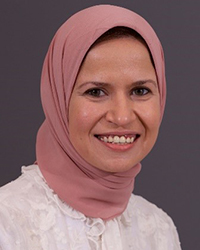
Real-World Evidence on Biologic Treatment and Safety in Pregnant Women with Autoimmune DiseasesName: Laila Aboulatta About You & Your Fellowship Program of Work:Biologic therapies are increasingly used to treat autoimmune diseases, yet evidence on their safety during pregnancy is limited. Through my embedded project, I will use linked administrative health databases to evaluate real‑world biologic use and associated maternal and infant outcomes. My research will inform clinicians' treatment decisions and support evidence-informed pregnancy care for women with autoimmune diseases. |
- Date modified: