Hope on the horizon for aggressive brain cancer
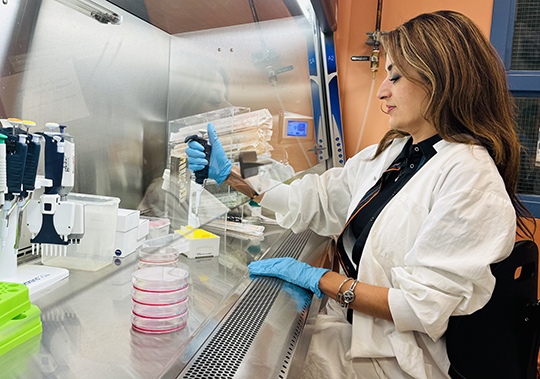
Glioblastoma is one of the most aggressive forms of brain cancers, accounting for 12 to 15% of all intracranial tumours in adults. Despite major advances in cancer research, glioblastoma does not respond well to radiation therapy or chemotherapy.
One reason glioblastoma is difficult to treat is because it is made up of many different types of cells. Even within a single patient, the cancer cells can carry different mutations. A rare population of glioblastoma cells behave like stem cells—those healthy and unique cells that help us heal and grow. Their stem-like properties allow the cancer cells to withstand treatment and regrow quickly.
Dr. Arezu Jahani-Asl, a professor in molecular medicine at the University of Ottawa, knows firsthand about the devastating nature of glioblastoma and its impact on patients and families. “I have had friends and relatives diagnosed with glioblastoma. It is a heartbreaking disease for which there is no cure,” she explains. That’s why she is working tirelessly to better understand and treat glioblastoma.
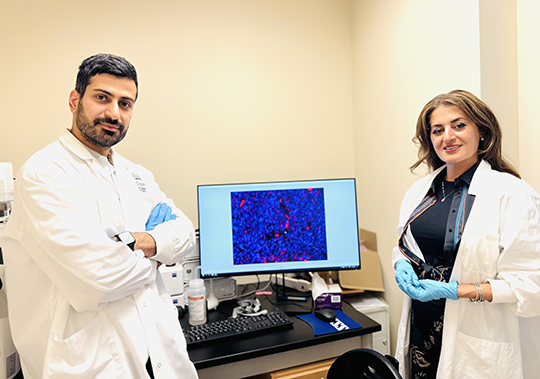
With funding from the Canadian Institutes of Health Research (CIHR), including a Canada Research Chair, Dr. Jahani-Asl discovered that a protein called oncostatin M receptor (OSMR) interacts with another protein—epidermal growth factor receptor (EGFR). These proteins form a network that promotes tumour growth and makes glioblastoma’s cancer cells resistant to therapies.
Researchers had previously known that a mutation in EGFR is the key driver of glioblastoma’s aggressiveness, but Dr. Jahani-Asl’s lab was the first to demonstrate the link between OSMR and glioblastoma: “Our pre-clinical studies showed that patients with higher levels of OSMR proteins tend to have shorter survival rates.”
Additionally, the team found that blocking OSMR protein can suppress glioblastoma. These findings open the door to promising therapies that may interfere with this protein network. “Such treatments could be developed through gene editing and other approaches. We are currently screening for peptides and medications that could disrupt OSMR networks,” explains Dr. Jahani-Asl.
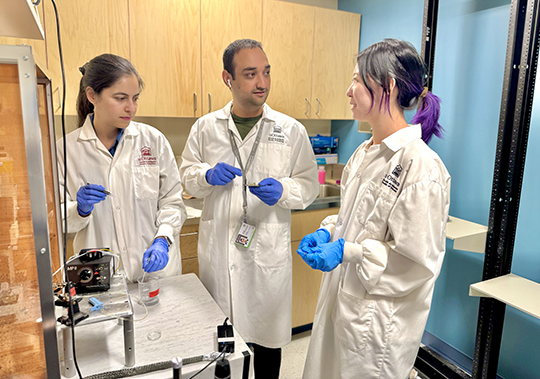
In another CIHR-funded study, Dr. Jahani-Asl identified an existing drug with potential to prevent the growth of glioblastoma’s stem cells. Her team discovered that edaravone, an ALS medication approved in the United States and Canada, can make cancerous stem cells more responsive to radiation, and could stop the tumour from growing back. “Using an approved and safe drug like edaravone could accelerate a clinical trial,” she says.
While these early results offer hope, the team has a lot of work ahead. Dr. Jahani-Asl is collaborating with researchers across Canada and the Unites States to turn these findings into novel, targeted therapies and better patient outcomes.
At a glance
Issue
Glioblastoma is one of the most aggressive forms of brain cancer. Despite decades of research, conventional therapies like radiation and chemotherapy have proven largely ineffective against glioblastoma because of the diversity of its cancer cells and the presence of resistant stem-like cells, allowing them to survive treatment and regrow rapidly.
Research
To address this urgent challenge for effective treatments for glioblastoma, Dr. Arezu Jahani-Asl at the University of Ottawa is paving the way for novel therapies and faster clinical trials.
Her research has been supported by CIHR, the Cancer Research Society, Canada Foundation for Innovation, and Fonds de recherche du Québec.
- Date modified: